A chubby coffee table can completely change the character of a living room without requiring a major decorating project. Its rounded edges, thick legs, and generously proportioned design bring softness and personality to spaces that might otherwise feel dominated by straight lines and sharp corners. Whether placed beside a modern sectional, a cozy boucle sofa, or a traditional upholstered couch, this distinctive furniture style creates an attractive focal point while providing a practical surface for everyday use.
Unlike conventional coffee tables with slender legs and thin tops, chubby coffee tables emphasize substantial shapes and sculptural details. Some feature oversized cylindrical legs supporting a smooth wooden tabletop, while others resemble rounded blocks of stone or softly curved furniture sculptures. Their designs can feel playful, minimalist, luxurious, or rustic depending on the materials and finishes.
However, choosing the right table involves more than finding an appealing shape. An oversized design may overwhelm a compact living room, while a table that sits too low can become inconvenient for drinks, books, and everyday activities. Material selection also matters because solid wood, engineered wood, stone, and painted surfaces require different levels of care.
Understanding these practical considerations will help you choose a chubby coffee table that complements your furniture, fits comfortably within your layout, and remains functional long after its initial visual appeal.
What Is a Chubby Coffee Table?
A chubby coffee table is a low living room table characterized by rounded, thick, or exaggerated proportions. The term describes a furniture aesthetic rather than one standardized shape or construction method. Most designs feature chunky legs, curved corners, substantial pedestal bases, or thick-looking tabletops that give the furniture a soft, sculptural appearance.
The design is closely associated with the broader movement toward rounded and organic furniture. Instead of relying on thin metal frames and angular surfaces, these tables use generous curves and visual weight to introduce warmth and character.
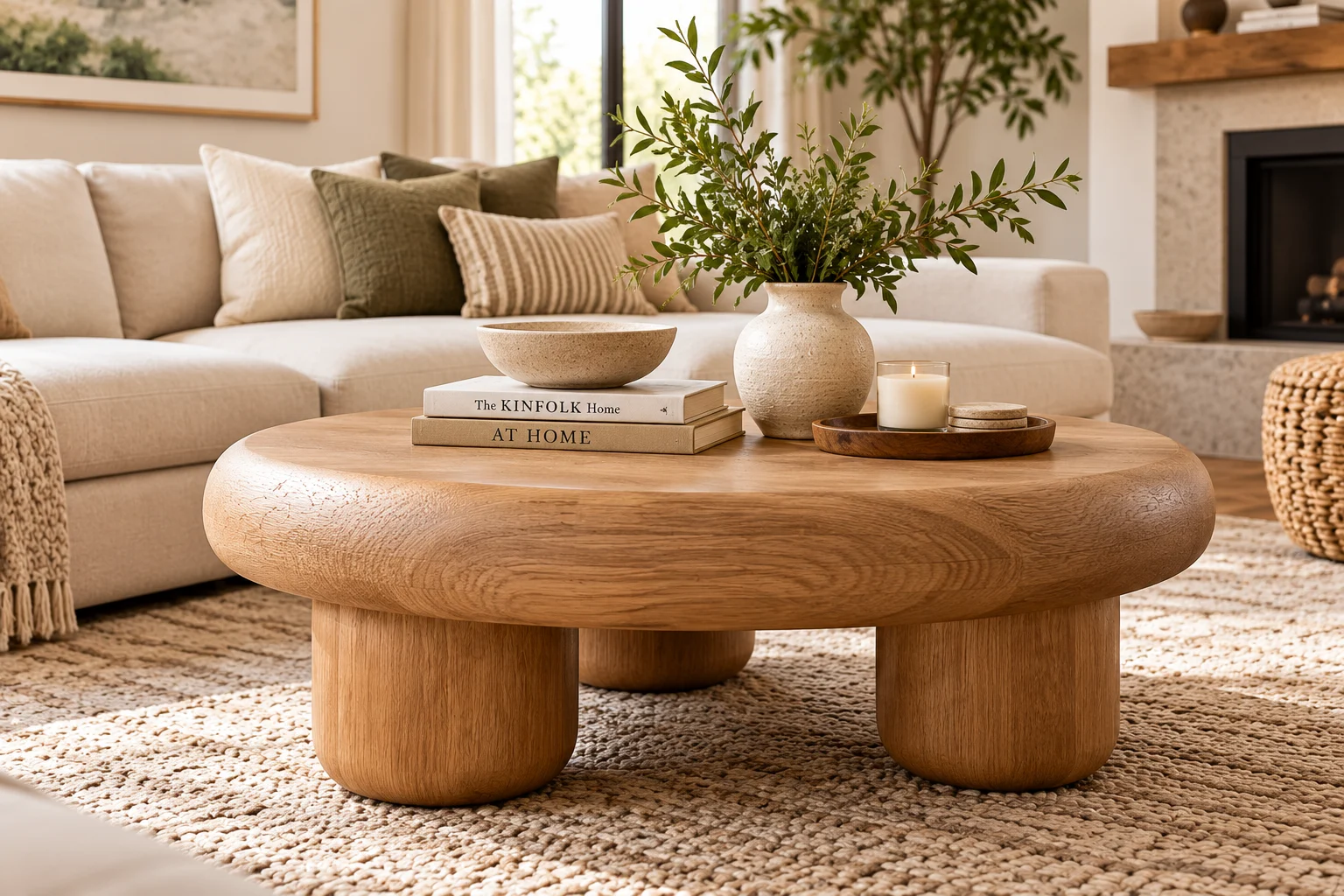
A typical chubby coffee table might feature a round oak top supported by three oversized cylindrical legs. Another design could use a smooth, rounded rectangular surface resting on two large sculptural supports. Some pieces appear almost monolithic, resembling a single carved object rather than furniture assembled from separate components.
The name is also used for specific designer products. For example, designer Arthur Vallin’s Chubby Coffee Table is a collectible furniture piece available in finishes including travertine, tinted oak, and lacquered wood. Its approximately 35.5-inch-wide, 13.75-inch-high proportions illustrate the low, sculptural character associated with the style.
Most homeowners searching for chubby coffee tables, however, are looking for the general rounded furniture aesthetic rather than one particular designer collection.
Why Are Chubby Coffee Tables Popular?
Chubby coffee tables appeal to homeowners who want furniture that feels comfortable and expressive without introducing excessive decoration.
Their rounded shapes create a visual contrast with rectangular sofas, straight shelving units, television cabinets, and conventional architectural details. A substantial wooden coffee table can make a minimalist room feel more welcoming, while a glossy, sculptural design may introduce a playful element into an otherwise neutral interior.
Curved furniture has remained prominent in contemporary interior design, with designers exploring organic shapes in sofas, seating, and tables.
These forms offer an alternative to the sharp geometry often associated with minimalist furniture.
Another reason for their appeal is versatility. Chubby coffee tables can complement Scandinavian-inspired interiors, mid-century modern rooms, contemporary spaces, and homes decorated with natural materials.
The design also creates an opportunity to make a statement without relying on bright colors or complicated patterns. A simple oak table with oversized rounded legs can become the most interesting object in a room through its proportions alone.
Despite their substantial appearance, these tables are not always exceptionally heavy. Their actual weight depends on the construction, and some use hollow forms or engineered materials to achieve their distinctive shape.
Popular Styles of Chubby Coffee Tables
Although chubby coffee tables share similar rounded proportions, their appearance can vary significantly. Understanding the most common styles makes it easier to select a design that suits your living room rather than choosing a table simply because it looks interesting in a photograph.
Round Chubby Coffee Table
A round chubby coffee table features a circular or nearly circular top supported by thick legs or a broad pedestal. The continuous shape helps soften living rooms containing rectangular sofas and angular furniture.
Round designs can work particularly well with sectional sofas, conversational seating arrangements, and rooms where people need to move around different sides of the table. However, a large circular top can still occupy considerable floor space, so diameter matters just as much as shape.
Natural oak, walnut, and cream-colored finishes are attractive choices for an understated appearance. A bold lacquered finish can make the same basic design feel more contemporary.
Wooden Chubby Coffee Table
Wooden chubby coffee tables combine substantial forms with natural grain and texture. Oak, ash, walnut, and other wood species can create different visual effects, ranging from pale Scandinavian simplicity to rich, traditional warmth.
A solid wood table may offer reparability and long-term value, depending on its construction and surface finish. Engineered wood with a quality veneer can also provide an attractive appearance and stable construction.
When buying wooden furniture, check whether the legs and tabletop are solid timber, veneered panels, or painted engineered components. Thick-looking furniture is not necessarily manufactured from solid wood throughout.
Sculptural and Organic Coffee Tables
Sculptural chubby coffee tables emphasize irregular curves, asymmetrical bases, and unexpected proportions. Some feature oval surfaces supported by unusual pedestal arrangements, while others resemble smooth stones or carved wooden objects.
These designs are well suited to contemporary living rooms where furniture serves both functional and decorative purposes. Their unusual silhouettes can provide enough visual interest that elaborate tabletop styling becomes unnecessary.
Before purchasing a sculptural table, confirm that its usable surface is large and level enough for drinks, books, and other everyday items.
Chunky Pedestal Coffee Tables
Pedestal designs feature one broad central support instead of several separate legs. A cylindrical or rounded pedestal creates a grounded appearance and can simplify the visual arrangement beneath the tabletop.
These tables are especially appealing in minimalist living rooms with neutral furniture and soft textiles. However, the design’s stability depends on the relationship between the tabletop, base dimensions, weight distribution, and construction quality.
How to Choose the Right Chubby Coffee Table Size
A coffee table should be proportional to the surrounding furniture while leaving enough room for comfortable movement. Because chubby designs often have substantial bases and thick tops, measuring the complete dimensions is particularly important.
Choose a Height That Matches Your Sofa
A practical starting point is to select a coffee table that sits approximately level with your sofa cushions or slightly below them.
According to Pottery Barn’s coffee table buying guide, coffee tables generally work well when their height is level with or slightly below the sofa seat, with a length around two-thirds of the sofa.
For example, if your sofa has an 18-inch seat height, a table approximately 16 to 18 inches high may feel comfortable. A much lower sculptural table can still look attractive, but reaching down to place drinks or collect everyday items may become less convenient.
Measure the Table Width and Walking Space
A table measuring approximately two-thirds of the sofa’s length often creates balanced proportions. However, this is a decorating guideline rather than a strict rule.
If your sofa measures 90 inches wide, a table around 55 to 60 inches long may be visually appropriate, provided the room has sufficient space. A round table should be evaluated according to its diameter and how it fits between the surrounding seats.
Leave roughly 14 to 18 inches between the sofa and coffee table as a useful starting range. This usually allows people to reach the tabletop without making the seating area unnecessarily cramped. Larger circulation routes may need considerably more space.
Remember to measure beyond the tabletop. Some chubby designs have legs or bases that extend outward, and these details can affect foot clearance or the placement of nearby furniture.
Are Chubby Coffee Tables Good for Small Living Rooms?
A chubby coffee table can work in a small living room, but the proportions must be chosen carefully.
Rounded corners can make circulation feel less awkward than sharp rectangular corners. However, the visual weight of thick legs and a substantial top may cause an oversized piece to dominate a compact area.
For a smaller room, consider a modest round design with a lighter finish and a simple pedestal base. Pale oak, warm cream, and soft natural finishes can coordinate with neutral furniture without creating a particularly strong visual contrast.
It may also help to select a table with a more compact surface rather than an extremely thick, oversized block shape.
If your living room requires additional storage, a chubby coffee table may not always be the most practical solution. Many sculptural designs have no drawers or shelves. In that situation, a smaller coffee table combined with a nearby storage cabinet or basket may work better.
For advice on reducing clutter and using available space efficiently, explore our complete guide to home organization.
Best Materials for a Chubby Coffee Table
The material you choose affects durability, maintenance, appearance, and the overall cost of the furniture. Since chubby coffee tables are often purchased for their distinctive shape, it is important to examine what lies beneath the finish.
Solid Wood and Wood Veneer
Solid wood offers natural variations in grain and color. It can be an appealing choice for homeowners who prefer warm, organic materials and furniture that may be repairable over time.
Quality wood veneer uses a thin layer of natural timber attached to a supporting material. It can provide a consistent appearance while allowing manufacturers to produce curved or substantial-looking shapes without using solid timber throughout.
Neither construction should be judged by appearance alone. Examine the surface finish, edge details, joints, and manufacturer’s care recommendations.
Marble, Travertine, and Other Stone
Stone chubby coffee tables can create an elegant, sculptural appearance. Marble offers distinctive veining, while travertine often features softer, earthy tones and a textured character.
Natural stone can be heavy, making delivery and repositioning more challenging. Some furniture uses stone veneer or stone-look finishes instead of solid stone, so inspect the product specifications carefully.
Marble and travertine also require suitable maintenance. The Natural Stone Institute recommends using coasters, addressing spills promptly, and cleaning natural stone with appropriate neutral products.
A stone-look table may be a practical alternative when you want the appearance without the weight or maintenance requirements of natural stone, although its durability depends on the actual surface material.
Painted and Lacquered Finishes
Painted and lacquered chubby coffee tables are available in colors ranging from warm white and beige to dark brown, burgundy, and glossy black.
These finishes can emphasize the furniture’s sculptural silhouette by creating a smooth, continuous appearance. A glossy surface often feels bold and contemporary, while a matte finish creates a quieter visual effect.
Before purchasing, consider how easily the surface may show fingerprints, scratches, or wear. Look for clear information about the coating, cleaning instructions, and whether minor damage can be repaired.
How to Style a Chubby Coffee Table in Your Living Room
The distinctive proportions of a chubby coffee table make it an effective focal point. The key is to complement its shape without covering the entire surface with decorative objects.
Pair Rounded Furniture With Balanced Shapes
A chubby coffee table can look attractive beside a curved sofa, but it does not need to match every furniture silhouette.
In fact, placing a rounded wooden table in front of a straight contemporary sofa can create a pleasing contrast. The combination introduces movement and softness while preserving a structured appearance.
If your room already contains several rounded chairs, mirrors, and lighting fixtures, consider using simpler surrounding accessories to avoid making every object compete for attention.
Use Natural Colors and Contrasting Textures
Warm neutral tones complement the generous shapes associated with chubby furniture. Beige, cream, taupe, soft gray, and natural wood can create a calming atmosphere.
For a more expressive interior, consider a dark walnut or colored lacquer table against light upholstery.
Texture also matters. A smooth sculptural table can look particularly appealing alongside a woven rug, linen cushions, and a textured sofa. The contrast helps distinguish the table from the surrounding furnishings.
You can explore additional advice on combining colors, textures, furniture proportions, and lighting in our complete guide to home decorating.
Keep Coffee Table Decorations Simple
Because chubby coffee tables are visually substantial, they often need fewer decorative objects than more conventional tables.
A small ceramic vase, a thoughtfully chosen book, or a shallow decorative tray may be enough to create an attractive arrangement.
Leave plenty of usable surface space for daily activities. A coffee table should accommodate drinks, books, and other essentials without requiring you to move decorations every time you sit down.
For an irregular or heavily textured table, minimal styling also allows the shape and material to remain visible.
How to Check Quality Before Buying
Product photographs can reveal a table’s appearance, but they rarely communicate its construction quality.
Begin by reviewing the dimensions, materials, item weight, and assembly instructions. If the table uses separate legs, inspect how they attach to the top. Look for sturdy connections and a stable base rather than assuming that thick legs automatically mean better construction.
Check the stated weight capacity, especially if you expect to place heavy books or decorative objects on the surface. Do not use a coffee table as seating unless the manufacturer explicitly designs and rates it for that purpose.
For stone designs, consider whether your flooring can accommodate the furniture and whether protective pads are suitable. Very heavy pieces may require professional delivery or more than one person to move safely.
Rounded edges may reduce the sharp-corner problem associated with some furniture, but they do not eliminate the risks of collisions or tipping. Stability and placement remain important, especially in households with young children.
Finally, review the return policy and warranty. Oversized or made-to-order sculptural furniture may have different return conditions from standard flat-pack tables.
How to Clean and Maintain a Chubby Coffee Table
Maintenance requirements depend on the material and finish.
For wooden tables, dust regularly with a soft cloth and use a cleaning method approved by the manufacturer. Avoid prolonged exposure to water and protect the surface from hot drinks when necessary.
Painted and lacquered finishes should generally be cleaned without abrasive pads or aggressive chemicals. Even durable coatings can become damaged by inappropriate cleaning products.
Natural stone requires additional care because certain liquids can cause staining or surface etching. Use suitable coasters and clean spills promptly according to the stone supplier’s instructions.
The rounded forms of chubby coffee tables may also create less obvious areas where dust accumulates, particularly around sculptural bases and underneath thick tabletops.
For further practical furniture care and cleaning guidance, visit our home cleaning and maintenance guide.
Are Chubby Coffee Tables Worth Buying?
A chubby coffee table can be a worthwhile investment when its appearance and function suit your living room.
Its sculptural character can make a relatively simple room feel more thoughtfully decorated, and rounded shapes can remain appealing even as other decorative preferences change.
However, the distinctive appearance does not automatically justify a higher price. Construction materials, surface durability, craftsmanship, and ease of maintenance should influence your decision.
A moderately priced wooden table with reliable construction may offer better everyday value than an expensive design that is difficult to clean or awkward to use.
Think about how the room functions before committing to a statement piece. The best choice should accommodate your normal activities, not require you to redesign your daily routine around the furniture.
Frequently Asked Questions About Chubby Coffee Tables
A chubby coffee table features exaggerated proportions, such as thick legs, rounded corners, wide pedestal supports, or substantial tabletops. The defining characteristic is its soft, sculptural appearance rather than a particular material or manufacturing technique.
Yes. Their rounded shapes can complement modern interiors, especially those featuring neutral colors, clean lines, and natural materials. A chubby table can also introduce a playful contrast into a minimalist living room.
The terms are closely related. Chubby furniture generally emphasizes rounded, soft-looking proportions, while chunky furniture may also include square, block-like, and angular designs. Both typically feature visually substantial forms.
A useful starting point is to select a table level with or slightly below your sofa’s seat height. Many living rooms accommodate coffee tables around 16 to 18 inches high, but the ideal height depends on your seating dimensions and personal comfort.
Wooden chubby coffee tables can be durable when manufactured with suitable materials, stable joints, and appropriate protective finishes. Solid wood and quality veneered construction each have advantages, so examine the complete specifications rather than relying only on the material name.
Yes. Round and oval chubby coffee tables can work particularly well with sectionals because their curved edges soften the angular seating arrangement. Choose a diameter or length that allows easy access without restricting movement.
Specific finishes and exaggerated designs may become more or less fashionable, but rounded furniture is not limited to one decorating period. A well-proportioned table in a versatile material may remain suitable for many years, even as surrounding accessories change.
Bring Character and Comfort to Your Living Room
A chubby coffee table offers an opportunity to introduce sculptural design into an everyday living space. Its generous proportions, rounded silhouette, and distinctive materials can create a welcoming atmosphere while giving the room a memorable focal point.
The most successful choice balances appearance with practicality. Measure your seating area, evaluate the tabletop height, consider maintenance requirements, and examine the quality of the construction before purchasing.
Whether you prefer a natural oak table with oversized legs, a sleek painted design, or a sculptural stone centerpiece, choose furniture that feels appropriate for your space and lifestyle. With thoughtful placement and simple styling, a chubby coffee table can become an enduring and useful part of your living room rather than just another passing decorating trend.