A beautiful home does not begin with an expensive sofa, a perfectly styled shelf, or a paint color that happens to be popular this year. It begins with an understanding of how you live. A room should support the activities that happen there, accommodate the people who use it, and feel like a place you want to return to. When those foundations are right, the decorative details become easier to choose and far more satisfying to live with.
Home decorating can still feel overwhelming. Countless styles, conflicting rules about color, and appealing photos show only one carefully arranged corner of a room. You may be furnishing your first apartment, refreshing a tired bedroom, decorating a small living room, or trying to make a house feel connected without replacing everything you own. The good news is that a thoughtful plan matters more than starting over. Small changes to furniture placement, lighting, textiles, and walls can change how a space works and feels.
What Is Home Decorating, and Where Should You Start?
Home decorating is the process of making an existing space more comfortable, functional, and visually coherent by arranging and selecting furniture, color, lighting, window treatments, artwork, and accessories. It overlaps with interior design, but decorating usually focuses on the visible furnishings and finishes rather than changing structural walls, plumbing, or the building’s electrical systems. You don’t need to choose a named design style before you begin, and you certainly don’t need to replace every item in a room.
The most useful starting question is not “What should I buy?” but “What isn’t working here?” A living room may look empty because its furniture sits too far apart. A bedroom may seem cold because it relies on one harsh ceiling fixture. A hallway may feel cramped because a decorative console blocks the normal walking route. These problems call for different solutions, and buying more accessories will rarely fix them. Decorating begins with identifying the real problem and deciding what success would look like.
Make a Simple Room Assessment
Before moving furniture, stand in the doorway and consider what draws your eye, where natural light enters, and what you notice first. Take photographs from several corners because a photo often reveals an awkward balance or cluttered surface that is easy to overlook in person. Notice where people actually walk, where bags accumulate, and which chairs nobody uses. These patterns reveal more than a mood board does about what the room needs.
Measure the room, including wall lengths, door swings, windows, radiators, outlets, and any fixed storage. Then measure the furniture you intend to keep. A rough floor plan on paper is sufficient: label large items and draw the clear routes between them. Measure furniture through its full use, not just its footprint. A dining chair needs room to pull back, a dresser drawer needs space to open, and a door needs room to swing without hitting a lamp. Checking these conditions first helps prevent purchases that look great online but feel frustrating at home.
Establish Priorities Before Choosing a Look
Choose one practical improvement and one visual goal for each space. For example, a living room might need better conversation seating and a warmer atmosphere; a bedroom might need hidden storage and a softer color palette. Write down what must stay, what can move, and what can leave. If money is limited, prioritize functional problems, safety concerns, and lighting before decorative finishing touches. A clear priority list protects you from buying several small objects while the main discomfort remains unresolved.
The Decorating Principles That Make Rooms Feel Balanced
Decorating principles are useful because they explain why certain rooms feel cohesive even when their furnishings come from different stores or decades. They are guidelines rather than laws, and good decorating makes room for preference, architecture, and daily life. Learning a few basics helps you judge a piece in the context of your home instead of asking whether it looks attractive in isolation.
Build a Color Palette That Connects the Space
Begin with the largest surfaces and objects you are keeping: flooring, cabinets, sofas, countertops, and significant wood tones. These existing colors are part of your palette whether or not you chose them. Select a broad background color, a few supporting colors, and one or two accents for smaller details. If the room already contains warm wood and creamy upholstery, a cool, blue-white paint might make those pieces seem disconnected. A warmer neutral, earthy green, or muted blue may create a more intentional relationship.
One common approach is to use a dominant color across large surfaces, a secondary color in textiles or furnishings, and an accent in artwork or accessories. Some decorators call this the 60-30-10 approach, but you don’t need to calculate exact percentages. Its real value is restraint: repeating a small selection of colors is usually more cohesive than introducing a new shade with every purchase. Neutrals do not have to be beige or gray; a muted green, soft terracotta, or gentle blue can act as a quiet background when used consistently.
Always test paint in the actual room. Observe large samples at different times of day and under the lighting you use in the evening. Daylight, shadow, floor reflections, and bulb color can change how a shade appears. Place samples near trim, flooring, and upholstery instead of assessing them against a blank white screen. If you are unsure, start with removable items such as cushion covers, throws, and artwork before committing an entire wall to a bold hue.
Understand Scale, Proportion, and Visual Weight
Scale describes how large something feels in relation to the room; proportion describes how its parts relate to each other. A narrow picture above an oversized sofa can feel lost, while a bulky chair in a tight walkway can dominate the space. Before buying, mark the intended width and height of furniture or artwork with painter’s tape, paper, or cardboard. The outline will tell you more about fit than a product photograph without context.
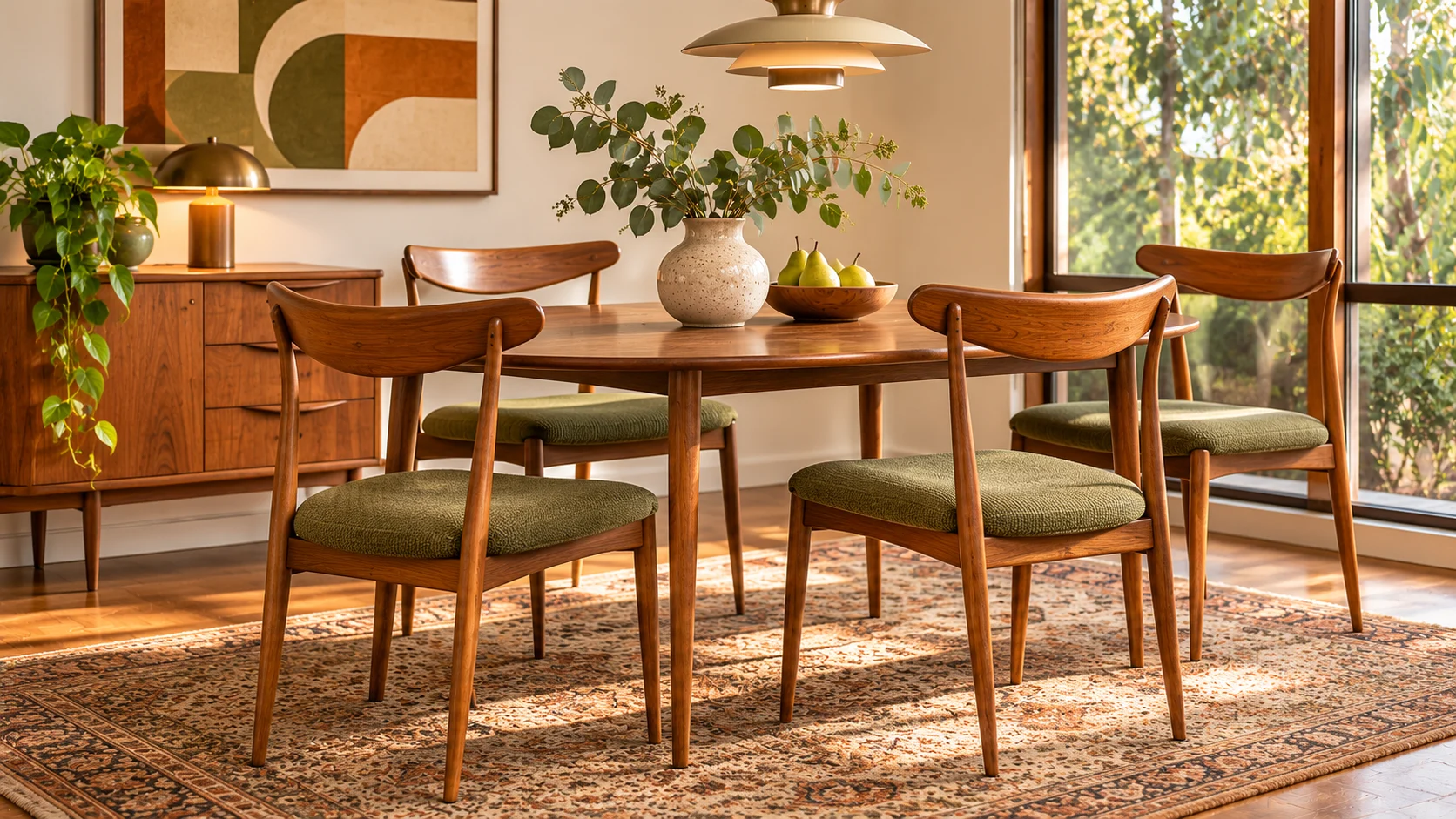
Visual weight matters as much as physical size. A dark cabinet with solid doors may feel heavier than a similarly sized open bookshelf. A slim-legged table often appears lighter than a chunky pedestal table, making it useful in smaller rooms. Balance does not require identical objects on both sides of a space. A substantial armchair can be balanced by a cluster of smaller pieces, a tall plant, or an artwork with strong presence. Step back from the room and compare the distribution of large shapes, dark colors, and busy patterns.
Leave intentional open space. Empty areas give important furnishings room to stand out and make everyday movement easier. Not every wall requires art, and not every corner needs a table. A modest room with fewer well-chosen pieces may feel more finished than one filled with matching decorative products. If the room feels crowded, remove something before adding something new.
Create a Focal Point and Support It
A focal point is the feature that gives the eye a natural place to settle. It may be a fireplace, a generous window, a sofa wall, a bed’s headboard, a statement light fixture, or a meaningful piece of artwork. Identify the strongest existing feature before purchasing additional decor. Then arrange secondary objects so they support rather than compete with it. In a living room with a beautiful view, for example, orient furniture to enjoy the window without making the television the center of every decision.
Layer Texture, Pattern, and Shape
Texture creates depth when the color palette is simple. Combine smooth ceramics, woven fabrics, timber, metal, glass, and soft upholstery to prevent a room from feeling flat. These contrasts work especially well in neutral interiors with fewer color differences. Texture also has a practical side: a washable cotton cover behaves differently from delicate velvet, and a tightly woven rug may be easier to maintain than a deep pile in a busy family room.
Patterns are easier to combine when they share at least one color and vary in scale. A broad stripe, a medium floral, and a small geometric pattern can work together more calmly than three patterns of equal visual intensity. Use plain fabrics between busy elements to give the eye a place to rest. Curved mirrors, rounded lamps, and organic ceramics can soften rooms dominated by rectangular windows, cabinets, and sofas. Aim for a considered mix rather than a matching set.
Use Lighting as Part of the Design
A well-decorated room needs light for several purposes. Ambient lighting provides general illumination; task lighting helps with reading, cooking, dressing, or work; and accent lighting highlights a feature or adds depth. A ceiling light alone rarely handles every activity comfortably. A living room may benefit from a floor lamp beside a reading chair, a table lamp near the sofa, and a gentle source that lights a darker corner. A bedroom may need bedside lamps you can reach without crossing the room.
Natural light also deserves attention. The U.S. Department of Energy explains that thoughtful daylighting can reduce reliance on artificial light, although glare and unwanted heat need to be managed. Its guidance on natural light and daylighting is a useful reminder to consider sun exposure before covering windows or choosing very reflective finishes. Light-filtering curtains can soften bright windows while preserving daylight; lined drapery or suitable shades can provide more privacy and light control where needed.
Check a bulb’s brightness, color temperature, fitting, and compatibility with dimmers rather than assuming all bulbs with the same shape perform alike. Warm light is often comfortable in relaxation spaces, while focused task lighting may be better at desks and worktops. Use the bulb and fixture manufacturer’s instructions, and leave any new wiring or electrical changes to a qualified professional where required.
Find Your Decorating Style Without Making Your Home Look Like a Showroom
A decorating style is a vocabulary, not a requirement. Contemporary rooms often favor simple shapes and carefully chosen statement pieces. Traditional rooms may include familiar furniture profiles, layered patterns, and classic wood finishes. Scandinavian-influenced spaces often use light colors, practical furniture, and natural textures, while modern organic interiors bring together clean lines, tactile fabrics, and warmer materials. Eclectic rooms mix different periods and influences through recurring color, proportion, or shape.
Instead of adopting a label from a photograph, collect examples of rooms you genuinely like and look for repeated features. Do you prefer enclosed storage or open shelves? Do you like a restrained palette or expressive color? Are you drawn to the patina of vintage furniture or the quiet lines of new pieces? The answers form a more useful personal style than buying everything advertised under one aesthetic. A home can be mostly contemporary and still include an inherited chest, a handmade rug, or a traditional mirror.
Living Room Decor: Create a Space for Real Life
The living room often has the most competing demands of any space. It may be a place for conversation, television, homework, reading, play, and guests. Successful living room decor starts with deciding which activities matter most in your household, rather than copying a furniture arrangement from a large staged home. A family that regularly hosts friends may want flexible seating; a household with young children may prioritize open floor space, washable covers, and easy access to storage.
Arrange Furniture Around Conversation and Circulation
Choose a main seating piece that fits the room, then position the other seats in relation to it. Chairs angled toward a sofa usually encourage conversation better than seats lined up along distant walls. You don’t have to push every piece against the perimeter; in some rooms, moving a sofa forward creates a comfortable seating zone and leaves a useful path behind it. Check that people can reach doors, windows, storage, and seats without squeezing between furniture edges.
Coffee tables should be close enough to use from the seating but far enough away for knees and movement. Side tables are especially valuable beside chairs where someone might place a cup or book. If an oversized coffee table interrupts circulation, try a smaller round table, nesting tables, or a movable ottoman with a stable tray. Sketch a few layouts before moving heavy furniture to compare options without buying anything.
In an open-plan room, use furniture backs, rugs, and lighting to suggest separate zones without building walls. A sofa can define a conversation area while a small desk occupies another corner. Keep the traffic route clear and avoid turning the living room into an obstacle course between the entry and adjoining spaces. Large furniture should serve the room’s daily activity rather than merely fill visible floor area.
Choose Rugs, Curtains, and Textiles Deliberately
An area rug can visually connect seating that otherwise seems scattered. When possible, choose a size that lets the main seating pieces relate convincingly to the rug; a very small rug floating beneath only the coffee table can make the arrangement feel disconnected. In a compact room, placing the front legs of a sofa and chairs on the same rug can create a unified grouping. Always check door clearance, cleaning needs, and whether the rug requires an appropriate non-slip pad.
Curtains soften hard surfaces, add privacy, and help control light. Hanging them close to the top of a window or higher, where installation conditions allow, can make the window feel taller. Measure before buying: the curtain length, width, stacking space, and radiator position all affect the result. Avoid treatments that block ventilation or interfere with safe operation of windows and doors. Cushion covers and throws are inexpensive ways to introduce seasonal color, but too many can leave nowhere comfortable to sit.
Style Storage, Shelving, and the Television Area
Storage has a strong visual impact because clutter accumulates on easy-to-reach surfaces. Give frequently used objects homes close to where you need them: a basket for blankets, a drawer for charging accessories, or a shelf for books. Use closed storage for items that aren’t attractive to display, and reserve open shelves for a deliberate mix of practical objects and meaningful pieces. A shelf feels more considered when objects vary in height, and some space remains visible between groups.
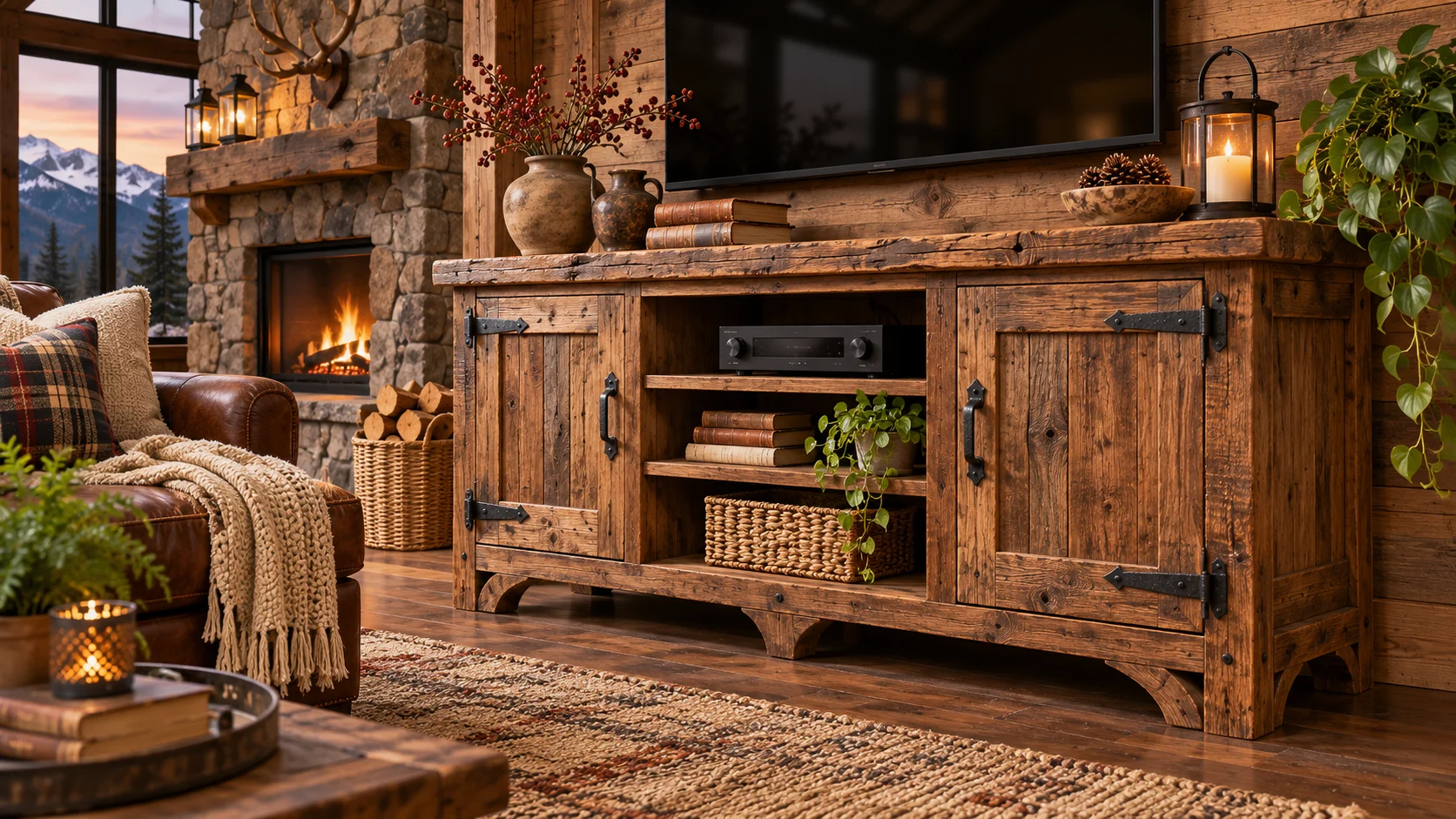
A television does not need to disappear, but the furniture around it should fit its size and viewing position. Avoid mounting it so high that viewers must tilt their heads for long periods. Do not place a television on furniture not designed to support it, and secure both the TV and appropriate storage furniture to reduce tip-over risk. The U.S. Consumer Product Safety Commission’s Anchor It! guidance explains why anchoring matters, especially in homes where children live or visit.
Bedroom Decor: Balance Comfort, Storage, and Personal Style
A bedroom should make everyday routines easier while offering a sense of retreat. That does not mean it must be neutral or minimal. Deep colors, expressive wallpaper, books, and patterned quilts can all create a restful personal space when arranged intentionally. Start with the bed, circulation, storage, window privacy, and the lighting you need for dressing, reading, and moving safely at night.
Make the Bed the Visual Anchor
The bed is usually the largest object in the bedroom, so its position influences everything else. Consider access from both sides where practical, outlet reach, nearby doors, and window visibility. A symmetrical pair of bedside tables may look orderly, but it is not necessary when the room’s dimensions are uneven. One narrow table and a wall-mounted shelf may work better in a tight layout than forcing two bulky matching pieces into the space.
The headboard, wall color, and bedding establish much of the room’s character. A plain upholstered headboard can make colorful bedding look deliberate, while a statement headboard may need simpler patterns around it. Choose bedding for comfort, climate, laundering requirements, and actual mattress dimensions before considering appearance alone. Layering a duvet, coverlet, or throw can look inviting, but every extra layer creates laundry and storage work; keep only what you are willing to maintain.
Control Light and Keep Essentials Within Reach
Consider how the room behaves at sunrise, during daytime dressing, and at bedtime. Blackout or room-darkening treatments may be helpful when outside light disrupts the space, while lighter curtains may suit rooms where daylight is welcome. If you use the room to read, add a focused bedside lamp that doesn’t light the entire bedroom. If you share the room, separate controllable lights can accommodate different schedules more easily than one central fixture.
Clear bedside space is more useful than a perfectly arranged vignette. A lamp, book, water glass, or small charging area may be enough. Manage cords so they do not run across walking paths, and keep a clear route from the bed to the door. In households with children, anchor tall dressers and bookcases using the appropriate hardware. Place decorative lamps and large mirrors where they are stable and unlikely to be knocked over.
Reduce Visible Clutter Without Losing Personality
Many bedrooms appear smaller because clothing, chargers, extra pillows, and occasional furniture compete for the same limited surfaces. Start by giving everyday items specific storage locations. Under-bed containers can help when they fit the space and stay accessible; drawer dividers can make existing dressers more effective; and a simple hook may solve the problem of clothes used again before washing. Remove unnecessary furniture if it blocks drawers or makes bed access awkward.
A bedroom does not need blank walls to feel calm. Choose a few meaningful pieces, such as a favorite print, a framed photograph, or a small book display. Repeat a color from the bedding in the artwork or a curtain to tie the space together. For a small bedroom, choose furniture with visible legs, sensible proportions, or dual functions rather than assuming every item must be miniature. A generously sized but well-placed mirror may expand the sense of light, but it should reflect something pleasant rather than a cluttered storage corner.
Wall Decor: Turn Blank Surfaces Into Meaningful Features
Walls strongly affect how a room feels because they surround everything else. They can serve as a quiet backdrop, display personal art, add texture, or create a focal point. The mistake is treating every blank wall as a problem that needs to be filled. Choose walls according to what the room needs: one strong piece over a sofa, a gallery of family images along a hallway, a washable finish in a high-traffic area, or perhaps no art at all beside an already striking window.
Choose Artwork for the Wall and Its Surroundings
Start with the relationship between the artwork and the furniture beneath it. A single small print above a long sofa may look isolated, while a large picture or coordinated group can carry enough visual presence. Lay out several frames on the floor first, or use paper templates on the wall to evaluate spacing. Pay attention to the overall silhouette of a gallery arrangement, not only the individual frames. Repeated frame finishes or a consistent border treatment can connect varied artwork without making every image identical.
Artwork should suit its location. Consider glare on glass, possible fading in direct sun, moisture near bathrooms, and the risk of damage in narrow passages. Heavy pieces require hardware appropriate for the wall material, the item’s weight, and the mounting instructions. Adhesive strips can work for some light objects, but their limitations and surface requirements matter. For anything heavy, uncertain, or installed above beds and seating, use a secure method rather than relying on a decorative solution meant for lighter objects.
Decide Between Paint, Wallpaper, Mirrors, and Shelves
Paint is versatile because it can recede or become the main feature. A single accent wall can introduce interest when there is a clear architectural or furniture-based reason for choosing it; otherwise, painting all the walls in one consistent color may feel more cohesive. Wallpaper can add fine pattern or strong drama, but match the material and adhesive to the surface and room conditions. Removable wallpaper can be attractive for renters, yet “removable” does not guarantee it will release cleanly from every paint finish.
Mirrors can bounce available light and reflect views, but they don’t create light on their own. Position a mirror to capture a window or another appealing feature, and check what it reflects from normal seating positions. Floating shelves offer display space but can quickly become clutter magnets, particularly if every shelf is packed edge to edge. Check wall structure, loading limits, and fixings before installing shelving, and keep delicate or heavy objects away from vulnerable locations.
Give Walls a Role in the Whole Home
Look beyond each wall individually. If adjoining rooms are visible from one another, repeating a restrained color, wood tone, or frame finish can help the home feel connected. Hallways benefit from durable finishes and decor that doesn’t obstruct movement. Entryways often need hooks, a narrow landing surface, and a mirror more than an elaborate installation. Kitchens and bathrooms need materials that withstand cleaning and moisture, so decoration must not interfere with ventilation, heat sources, or routine upkeep.
Before changing paint or stripping old finishes, consider the building’s age. In the United States, the EPA’s lead-safe renovation guidance warns that disturbing paint in pre-1978 homes can create hazardous lead dust. Rules and risks differ by country, so investigate the age and materials of an older property and use suitably qualified help when needed. Decorative improvement should not create an avoidable health or safety problem.
Budget Decorating: Make Every Purchase Work Harder
An affordable home can still look purposeful, layered, and personal. Budget decorating is not simply a hunt for the cheapest product. It is the process of using what you have, directing money toward high-impact changes, and avoiding purchases that need replacing almost immediately. A small budget works better when you distinguish what a room genuinely needs from what looks appealing for a moment in a store.
Shop Your Home Before Shopping Elsewhere
The first budget decorating project should cost nothing. Move a lamp from a rarely used room, test a side table beside a different chair, swap cushion covers between rooms, or hang an existing picture where you can enjoy it. Rearrange the living room based on conversation, not wall space. Removing an unwanted chair may improve openness more than buying another accessory. Photograph the new arrangement and live with it for several days before deciding what is still missing.
Set a Budget Based on Problems, Not Product Categories
Make a realistic total budget and reserve a portion for unexpected materials, delivery costs, tools, or installation. Prioritize changes in this order: safety and functional issues, light and layout, necessary storage, then aesthetic finishing touches. You do not need to spend equally in every area. A comfortable desk chair or properly sized rug may produce more everyday value than multiple fashionable accents. If a sofa is sound but visually tired, washable covers or new pillows may be a better first step than replacing it.
Compare the full cost of a purchase, including shipping, assembly, maintenance, and expected lifespan. An inexpensive cabinet that cannot carry the intended load is not a bargain. A secondhand solid-wood table that needs cleaning may be a better long-term choice than a fragile new one, as long as you can inspect its condition and transport it safely. Avoid impulse buying until you know the item’s measurements and exactly where it will go.
Use Paint, Textiles, and Small Changes Strategically
Painting can have a big visual impact when the surface is suitable, and preparation is done correctly. Clean the wall, repair small defects where appropriate, test color, and use the recommended primer or finish. For rented homes, obtain permission before making permanent changes. Replacing worn curtain panels, adding a properly sized rug, improving lighting, and reupholstering or covering an existing cushion can also change a room’s mood without replacing major furniture.
Do-it-yourself projects are most satisfying when they match your tools, skills, available time, and risk tolerance. Painting a basic picture frame and sewing a cushion cover may be approachable first projects. Installing new electrical wiring, altering structural elements, or mounting very heavy objects is different and may require a licensed professional. Consider low-emitting finishes and ventilate during and after appropriate painting or adhesive work. The EPA’s remodeling and indoor-air guidance recommends choosing suitable lower-emitting products and following the manufacturer’s directions.
Buy Secondhand With a Useful Inspection Routine
Thrift stores, reuse markets, local listings, and estate sales can offer sturdy furniture, mirrors, ceramics, and original artwork. Check dimensions, stability, odors, signs of pests, moisture damage, and whether drawers or doors work properly. Avoid upholstered items with evidence of infestation or contamination. For children’s products, electrical items, and pieces that could tip over, confirm condition and relevant safety information rather than assuming a low price justifies the risk.
Decorating Small Spaces, Rentals, and Shared Homes
Small rooms need clear priorities more than miniature furniture. Decide which activities must occur in the space and furnish for those tasks. A studio might use an attractive bookshelf to suggest separation between sleeping and sitting; a compact living room might benefit from a sofa with visible legs and a small, flexible side table. Vertical storage can free floor space, provided shelves are securely installed and objects remain accessible. Large furniture is not automatically wrong for a small room; one appropriately scaled statement piece can look calmer than numerous tiny items.
Treat walking routes as part of your design. Avoid placing a bench where a door opens, a storage basket in a narrow hall, or a fragile display near a daily path. People using wheelchairs or mobility aids may require considerably more circulation space than decorative layouts show. The 2010 ADA Standards use a 36-inch clear width for many accessible routes in covered settings, but that is a formal accessibility reference, not a universal legal rule for every private home. Plan generously around your household’s actual needs, and check applicable local standards for accessibility projects.
Renters can add character with freestanding shelving, fabric, bedding, lamps, plants, rugs, and art that doesn’t require permanent changes. Check the lease and test removable products in an inconspicuous place before using them widely. Shared households benefit from agreeing on how common rooms function before debating colors. Set up storage for everyday belongings and choose surfaces that can handle real use. Individual expression can come through personal rooms or small collections without making the shared living area difficult for others.
Decorate With Plants and Natural Materials Thoughtfully
Plants add living texture and a connection to nature, but place them based on their needs rather than an empty corner in a photograph. Check the species’ light, watering, drainage, temperature, and pet-safety requirements before buying. A plant labeled “low light” can’t thrive indefinitely without enough light. Penn State Extension’s guide to low-light houseplants explains how plant responses change under different lighting conditions. Grouping plants with compatible care needs makes maintenance easier and keeps the display coherent.
Natural materials such as wood, linen, cotton, wool, stone, rattan, and ceramic can bring variety and tactility to a room, but each has its own care requirements. Unsealed wood may be sensitive to moisture, some rugs shed, and soft pale upholstery can be demanding in a household with pets. Choose materials based on the surface’s function. A delicate textile may look lovely on a rarely used accent chair but be impractical on the seat where children eat snacks every afternoon.
The word “natural” does not automatically mean safe, sustainable, or low-maintenance. The U.S. Federal Trade Commission cautions consumers to examine environmental marketing claims rather than relying on vague phrases such as “non-toxic” or “VOC-free.” Its guide to green marketing claims is useful when comparing paint, cleaners, and finishes. Read product information carefully, and consider longevity, repairability, and your home’s actual conditions.
A Practical Decorating Plan You Can Follow Room by Room
A decorating plan works best as a series of decisions, not one shopping trip. Begin by taking inventory and setting the room’s purpose. Measure the space and existing pieces, then sketch possible layouts. Decide what must stay and what is genuinely missing. Choose the main furniture arrangement before selecting a paint color, rug, or art placement, because the room’s large shapes determine much of its balance.
Make the large or difficult decisions first: essential furniture, major storage, rug size, window treatments, and any required professional work. Purchase smaller decorative objects only when those elements are settled. Keep receipts and product measurements together, and confirm delivery access before ordering large items. Once the pieces are in place, style shelves and walls gradually. Living in a room for a week often reveals practical needs you could not predict on paper.
Finally, perform a functional check. Can everyone move through the room comfortably? Does a chair block a drawer? Can you switch on a bedside lamp without getting out of bed? Is the artwork securely mounted? Does the room provide appropriate light for tasks and relaxation? A successful result passes these everyday tests, even if it doesn’t match the original mood board exactly.
Common Home Decorating Mistakes and How to Avoid Them
The most expensive decorating mistake is buying before measuring. A sofa that is too deep for the room, a dining table that leaves no space for chairs, or curtains that are too short can undermine an otherwise thoughtful scheme. Always record the item’s dimensions, compare them to the actual room, and check how you’ll use it. When possible, make a full-size outline on the floor before buying.
Another frequent mistake is matching everything too closely. A room where furniture, cushions, curtains, and decor arrive as one coordinated set can feel impersonal. Cohesion comes from recurring features, not identical products. Mix complementary finishes, vary heights and textures, and include objects that reflect your interests. Conversely, mixing without an underlying relationship can look disjointed, so repeat at least a few colors, shapes, or materials across the space.
Poor lighting can undo the effect of good paint and furniture. Overhead brightness alone can make a room feel harsh, while decorative lamps without enough task lighting make it hard to read or work. Treat lighting as part of the initial plan. Likewise, choosing furniture solely for appearance ignores maintenance, cleaning, household movement, and comfort. A useful home should not require constant rearrangement to function.
Safety, Maintenance, and Long-Term Decorating Decisions
Safety is not separate from decorating. It should influence what goes where. Anchor potentially unstable dressers, bookcases, and televisions properly; keep cords away from walking routes; and secure or remove rugs where they pose a trip hazard. Penn State Extension’s fall-prevention guidance recommends clear walkways, good lighting, and attention to loose rugs. Homes with small children, older adults, or people with mobility needs may require additional adaptations that are more important than a particular decorative look.
Consider how the room will age. Washable fabrics, serviceable furniture, accessible storage, and finishes you can touch up are often more useful than delicate items that must always be handled carefully. Check cleaning instructions before purchase, especially for rugs, upholstery, and window treatments. Periodically inspect hanging hardware, furniture anchors, and high-use furnishings for wear. A home should be easy to maintain in its normal daily condition, not only immediately after a thorough tidy-up.
Frequently Asked Questions About Home Decorating
Begin with one room rather than trying to plan the entire home. Identify the room’s main activity, measure it, decide what you want to keep, and choose one improvement that will make daily life easier. Arrange the largest furniture pieces first, then assess lighting and the existing colors. Take your time with accessories; they are easier to choose once the room works properly. A simple plan you follow is more useful than a complicated mood board you never act on.
Start with the seating arrangement and the way people move through the space. Place the main sofa or seating piece, decide where conversation and TV viewing happen, and keep doors and pathways clear. Then consider a rug that visually connects the seating, layered lighting, and storage for the items you use most often. Wall art and small decorative objects should support this foundation rather than determine it.
Rearrange existing furniture for easier movement and remove items that obstruct drawers or the bed. Change or refresh bedding, improve bedside lighting, and use one selected wall display rather than many small purchases. Washable cushion covers, a carefully chosen throw, a secondhand bedside table, or a repurposed lamp can make a noticeable difference. Prioritize what affects daily comfort before spending on purely decorative items.
Assess the wall together with the furniture below it, rather than choosing art by itself. Mark the proposed width and height with paper or painter’s tape, and stand back to see whether the piece has enough visual presence. Several coordinated frames can fill the role of one larger work. Consider viewing height, nearby furniture, glare, and secure mounting. The best size is one that looks proportional in your particular room, not a fixed measurement taken from an unrelated photograph.
Good circulation, appropriately sized furniture, organized storage, and careful lighting can make a small room feel more open. Keep unnecessary objects off the floor and use vertical storage where practical. Furniture with visible space beneath it may look lighter, and a mirror can reflect existing light or a pleasant view. Don’t assume all furniture must be tiny or every surface must be white; scale and layout matter more than a single color trick.
Reuse first when the items are suitable, safe, and still useful. Moving art, rearranging furniture, repairing a sturdy table, or refreshing textiles can make a meaningful improvement at less cost. Buy new when you have identified a real functional or visual gap and know the item’s dimensions and purpose. A mix of kept, repaired, secondhand, and new pieces often produces a home with more character than a complete matching purchase.
Create a Home That Looks Good and Works Better
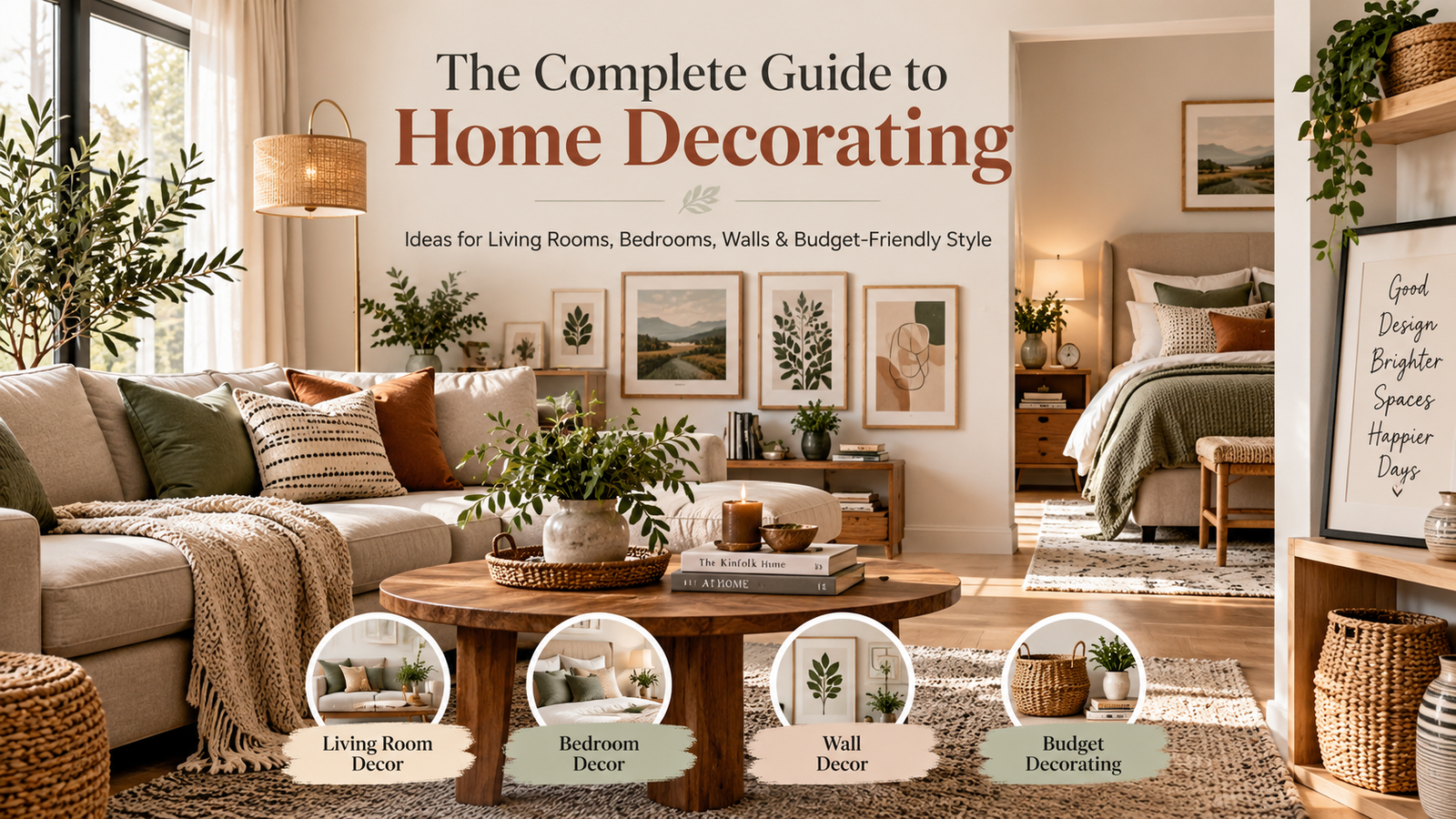
The best decorating decisions start with how you use a home. Measure before buying, allow space to move, establish a manageable palette, combine comfortable lighting with useful storage, and give meaningful objects room to stand out. Living room decor, bedroom decor, wall decor, and budget decorating are different parts of the same process: making a space more welcoming without losing sight of comfort and practical needs.
Choose one room and make a small plan today. Start with the layout and lighting, then work outward toward color, textiles, and artwork. Keep what works, improve what does not, and build the result gradually. A thoughtfully decorated home does not have to look like anyone else’s. It should feel good to the people who actually live there.