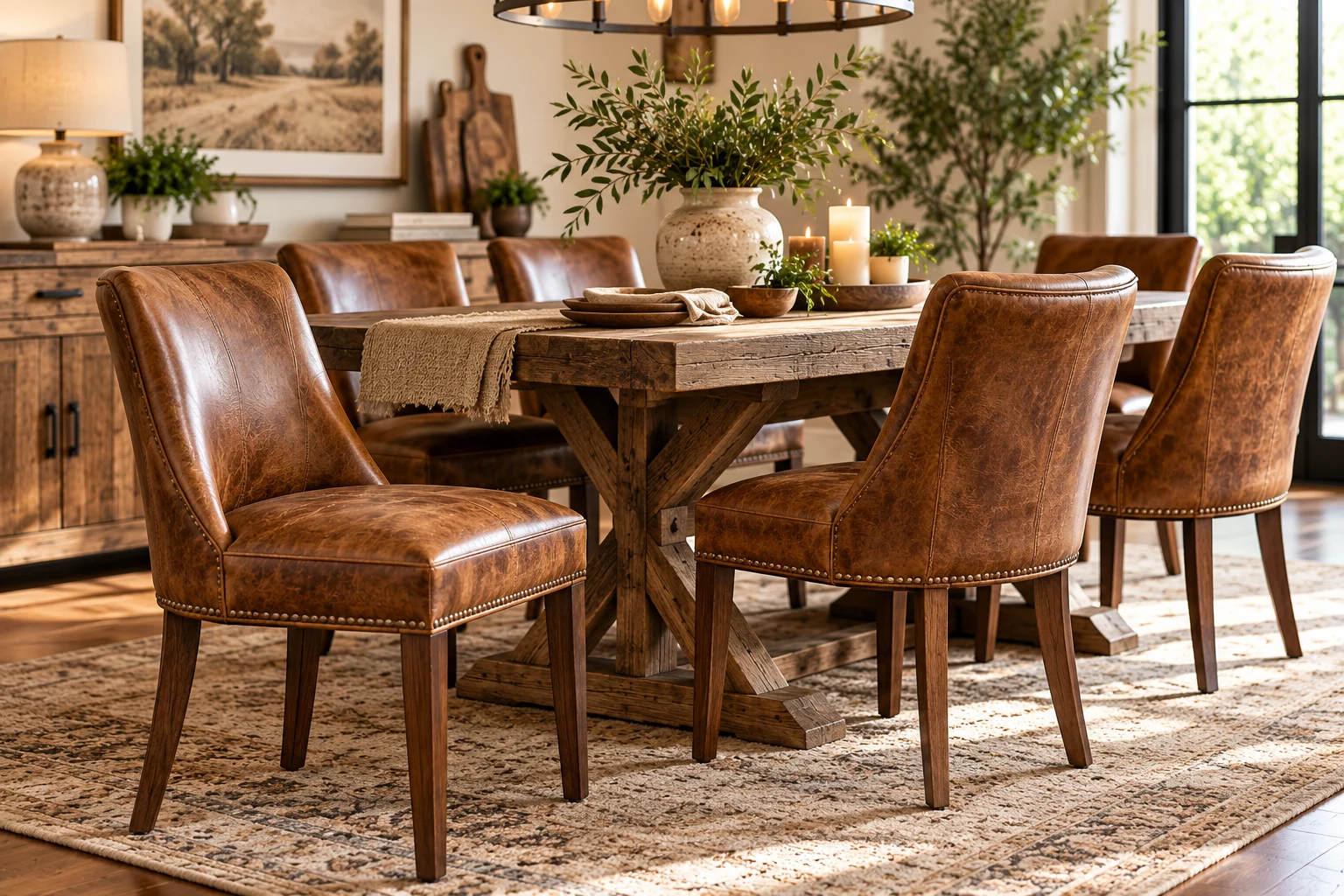
Rustic leather dining chairs bring a distinctive combination of warmth, comfort, and natural character to a dining room. With their textured upholstery, earthy colors, and sturdy wooden or metal frames, these chairs can make a simple dining area feel more welcoming and thoughtfully designed. Whether you have a reclaimed wood dining table, a modern farmhouse interior, or an industrial-style dining space, leather seating offers an attractive way to combine practical furniture with timeless design.
However, choosing the right chairs involves more than selecting a beautiful brown leather finish. The type of upholstery, frame construction, seat dimensions, and overall design all affect how the chairs feel and perform during everyday use. Some genuine leather develops a rich patina over time, while other finishes are designed to resist stains and maintain a more consistent appearance. Faux leather offers another option, but its quality and durability can vary significantly.
The size of your dining table also matters. Chairs that look perfectly proportioned in product photographs may sit too high, occupy too much space, or prevent people from moving comfortably around the table. Understanding these practical details before purchasing can help you avoid expensive mistakes.
This guide explains how to choose rustic leather dining chairs that suit your dining space, including popular styles, leather materials, comfortable seat dimensions, construction quality, decorating ideas, and maintenance requirements.
What Are Rustic Leather Dining Chairs?
Rustic leather dining chairs are seating pieces that combine leather or leather-look upholstery with natural, aged, or rugged design elements. Their appearance often emphasizes warm colors, visible textures, sturdy construction, and materials that complement farmhouse, country, vintage, or industrial interiors.
A typical rustic leather chair might have a cognac-colored leather seat supported by solid wooden legs. Another design could feature a curved brown leather backrest with a matte-black steel frame. Some chairs incorporate decorative stitching, distressed finishes, exposed seams, or traditional wooden details to create a more established, lived-in appearance.
The term “rustic” describes the furniture’s visual character rather than a specific construction standard. A chair advertised as rustic is not necessarily handmade, manufactured from reclaimed materials, or upholstered in genuine leather.
You may also encounter related descriptions such as farmhouse leather dining chairs, vintage leather dining chairs, industrial leather chairs, or distressed leather dining chairs. These designs share certain characteristics, but their materials, proportions, and overall appearance can differ.
The best rustic seating combines inviting aesthetics with enough support, stability, and practicality for regular dining.
Why Choose Leather Dining Chairs for a Rustic Dining Room?
Leather pairs naturally with the materials commonly found in rustic interiors, including oak, walnut, reclaimed timber, exposed brick, stone, and dark metal.
Its surface introduces a contrasting texture beside wooden furniture. A smooth leather seat can soften the appearance of a substantial farmhouse dining table, while a gently aged leather finish can complement visible wood grain and weathered details.
Leather dining chairs are also versatile. The same set may work in a traditional farmhouse dining room, a contemporary kitchen, or an industrial-style loft. Changing surrounding accessories, lighting, or wall colors can refresh the room without requiring new seating.
Practicality is another consideration. Certain protected leather finishes can be relatively straightforward to maintain, making them suitable for dining areas where spills occasionally occur. However, delicate leather finishes may absorb liquids or develop marks more easily.
Rather than assuming every leather chair is durable or easy to clean, consider the specific upholstery treatment and how frequently the chairs will be used.
Popular Styles of Rustic Leather Dining Chairs
Rustic leather dining chairs come in several designs, each creating a different atmosphere. Choosing a style that complements your existing furniture is usually more effective than purchasing an entirely new matching dining set.
Farmhouse Leather Dining Chairs
Farmhouse leather dining chairs commonly feature warm brown or tan upholstery paired with natural wooden frames. Simple shapes, visible wood grain, and comfortable backrests give these chairs a relaxed appearance.
They work particularly well with rectangular oak tables, white farmhouse furniture, and neutral dining rooms. Cognac leather can add warmth to a white or light-colored room without making the space feel overly traditional.
If your table already has decorative legs or prominent wood textures, consider chairs with simpler silhouettes to maintain balance.
Industrial Rustic Leather Dining Chairs
Industrial designs combine leather upholstery with steel frames, exposed structural elements, and darker finishes. Black metal legs paired with tan or chocolate-brown leather are particularly effective when used alongside reclaimed wood tables.
This combination creates contrast between the softness of the upholstery and the more utilitarian appearance of metal.
Industrial rustic chairs are suitable for open-plan kitchens, loft-inspired interiors, and contemporary dining spaces where natural materials are combined with modern furniture.
Vintage Distressed Leather Dining Chairs
Vintage-inspired chairs often feature slightly worn-looking leather, decorative stitching, traditional frames, or curved backs.
Some genuine leather develops a natural patina through use, gradually changing its color and surface character. However, this behavior depends on the leather type and finish. Not all leather ages in the same way.
Distressed leather is appealing when you want furniture that feels relaxed rather than perfectly polished. However, intentional variations in color should not be confused with cracking, peeling, or structural deterioration.
Modern Rustic Leather Dining Chairs
Modern rustic dining chairs simplify traditional farmhouse features. They may include smooth leather seats, gently curved backrests, slim wooden legs, and minimal decorative details.
These chairs are suitable for homeowners who appreciate natural textures but prefer contemporary furniture arrangements.
A modern rustic chair can also help connect different styles within an open-plan living area, particularly when the dining room includes both wooden furniture and modern lighting.
Genuine Leather vs. Faux Leather Dining Chairs
The upholstery material is one of the most important factors when purchasing rustic leather dining chairs. Genuine leather and synthetic alternatives can look similar in photographs, but their characteristics and maintenance requirements differ.
Genuine Leather Dining Chairs
Genuine leather is produced from animal hide and is available in different grades and surface finishes.
Full-grain leather retains its original grain surface. Corrected-grain leather undergoes surface treatment to create a more uniform appearance. Aniline leather shows natural characteristics more clearly, while semi-aniline leather contains a lightly pigmented finish.
The Leather Working Group’s leather terminology guide explains these distinctions and provides definitions used within the leather industry.
For dining furniture, the surface finish can be just as important as the leather’s grade. A heavily used family dining room may benefit from a suitably protected finish, while someone seeking a natural, changing patina may prefer a less heavily treated material.
Before buying, request specific information about the leather type, protective coating, and recommended cleaning products.
Faux Leather Dining Chairs
Faux leather is a synthetic material designed to resemble genuine leather. Common versions use polyurethane or other coatings applied over a fabric backing.
Its main advantages can include affordability, consistent color, and relatively simple surface cleaning. However, durability differs significantly between products.
Lower-quality coatings may peel, crack, or separate from their backing over time. Higher-quality materials may perform better, but appearance alone does not establish durability.
For regularly used dining chairs, examine the manufacturer’s upholstery specifications, warranty, and cleaning instructions rather than selecting faux leather solely because it costs less.
Which Material Should You Choose?
For buyers who appreciate natural texture, repairability in suitable circumstances, and the possibility of a developing patina, quality genuine leather may be appealing.
For those who prefer a lower initial cost or a consistent appearance, well-manufactured faux leather may be more practical.
Also check descriptions such as “bonded leather” or “leather match.” These do not necessarily mean that the entire chair is upholstered in conventional genuine leather. Ask the retailer to identify the material used on each seating surface.
Choosing the Best Frame Material
The frame supports the chair and influences how stable it feels during everyday use.
Solid wood frames are common in rustic furniture. Oak, ash, beech, rubber wood, and walnut are among the materials used in different chair designs. The strength of the finished chair depends on the joints, supports, manufacturing quality, and overall design rather than wood species alone.
Metal frames are popular in industrial-style furniture because they can provide structural support while maintaining a relatively slim appearance. Look for secure connections, stable legs, and an appropriate protective finish.
Regardless of material, check that the chair sits evenly on the floor without rocking. Examine how the legs connect to the seat, whether joints feel secure, and whether replacement hardware is available.
If responsible wood sourcing is important, the Forest Stewardship Council explains its certification labels and how they apply to furniture and other wood products.
How to Choose the Right Dining Chair Size
A chair that does not fit your table can make even a beautiful dining room uncomfortable. Before purchasing, measure your table height, available seating width, and the space needed to pull chairs away from the table.
Dining Chair Seat Height
Standard dining tables commonly measure approximately 28 to 30 inches high, while dining chair seat heights often range from 17 to 19 inches.
A useful starting point is to allow approximately 10 to 12 inches between the top of the seat and the underside of the table, where possible. This helps accommodate the thighs and provides a comfortable eating position.
For example, if the usable space beneath your table measures 28 inches from the floor, an 18-inch-high chair provides approximately 10 inches of clearance.
However, dining tables sometimes have thick aprons or decorative rails that reduce legroom. Always measure the lowest obstruction beneath the table, not just the tabletop.
The IKEA dining chair size guide offers additional guidance on seat height, depth, width, and clearance.
Seat Width and Depth
Leather dining chairs with padded seats or wraparound backrests may occupy more space than simple wooden chairs.
For comfortable dining, allow approximately 24 inches of table-edge space per person as a starting point. Wider armchairs may need around 28 to 30 inches or more.
Seat depth also matters. A chair that is too deep may prevent shorter users from resting comfortably against the backrest, while an overly shallow seat may provide insufficient thigh support.
If possible, sit in a comparable chair before purchasing, especially when buying a complete set for frequent use.
Space Behind Dining Chairs
Remember that dining chairs need room to move.
A comfortable arrangement should allow people to pull chairs away from the table and stand without hitting nearby furniture. Where space permits, approximately 36 inches behind a dining chair is a useful planning starting point, particularly where others need to walk past.
In smaller dining rooms, carefully chosen armless chairs may make better use of the available area.
How to Style Rustic Leather Dining Chairs
The natural colors and textures of leather make these chairs relatively easy to coordinate with different dining furniture.
Pair Brown Leather With Wooden Dining Tables
Brown leather and natural wood create a warm, cohesive combination. Cognac leather looks particularly attractive beside lighter oak, while deep chocolate upholstery can complement walnut and darker timber.
The wood and leather do not need to match perfectly. Slight variations often create a more natural appearance than identical tones throughout the room.
A weathered dining table with simple leather chairs can provide enough character that elaborate decorative furniture becomes unnecessary.
Combine Leather with Neutral Colors
Cream, beige, warm white, olive green, and muted gray can complement rustic brown leather.
For a bright dining room, consider tan leather chairs around a natural wooden table, paired with light walls and understated pendant lighting.
If you prefer a more dramatic appearance, dark leather seating can work against warm white walls, textured stone, or muted green paint.
The important consideration is maintaining a connection between major furniture colors and smaller details.
For additional advice on coordinating furniture, lighting, materials, and color palettes, explore our complete guide to home decorating.
Mix Leather Chairs With Other Seating
You do not necessarily need six identical leather chairs to create an attractive dining arrangement.
A practical alternative is to use leather armchairs at the ends of a rectangular table while placing simpler wooden chairs along the sides.
Another option is to combine a dining bench with leather chairs. This approach can introduce visual variation and offer flexible seating, provided the furniture dimensions work together.
Choose at least one consistent element, such as frame color, wood tone, or upholstery shade, to keep the arrangement visually connected.
Are Rustic Leather Dining Chairs Comfortable?
Leather dining chairs can be comfortable for regular meals, conversations, and entertaining, but comfort depends largely on their overall construction.
A supportive backrest, suitable seat depth, stable frame, and appropriate cushion firmness are important considerations. Some chairs feature thick padding, while others use a thin leather-covered seat designed for a firmer sitting experience.
Armrests may improve comfort during longer meals, although they also increase the chair’s width and can prevent it from sliding beneath certain tables.
Pay attention to the seat’s front edge and backrest angle. A chair should support your body without placing uncomfortable pressure behind the knees or forcing you to lean excessively forward.
If your dining area is used for occasional laptop work or lengthy family gatherings, prioritize comfort and seat proportions over purely decorative features.
How to Clean and Maintain Rustic Leather Dining Chairs
Proper maintenance helps preserve both the appearance and functionality of leather dining furniture.
Begin by removing loose dust with a soft, dry cloth. For crumbs trapped around seams, a vacuum with a suitable soft brush attachment may be useful.
Some protected leather chairs can be wiped with a slightly damp cloth. However, this should only be done when permitted by the manufacturer.
For example, IKEA’s leather dining chair care instructions recommend gentle dust removal, suitable vacuuming, wiping with a damp cloth, and protection from direct sunlight.
Avoid using harsh household cleaners, abrasive scrubbers, or unapproved conditioning products. Different leather finishes react differently, and products suitable for one type may damage another.
If a drink spills, respond promptly using the recommended cleaning method. Do not scrub aggressively or saturate the upholstery with water.
Position leather furniture away from persistent direct sunlight and strong heat sources when possible. Also inspect wooden or metal chair connections periodically to ensure they remain secure.
For more practical cleaning and furniture-care advice, read our complete guide to home cleaning and maintenance.
What Should You Consider Before Buying a Set?
Rustic leather dining chairs are available at different price levels, and the most expensive option is not automatically the most suitable.
A higher price may reflect genuine leather, specialized upholstery, solid wood construction, more detailed craftsmanship, or brand positioning. Less expensive alternatives may use synthetic materials and simpler frames.
Before ordering, compare the following details:
- Actual upholstery materials and protective finishes
- Seat height, width, depth, and overall dimensions
- Frame construction and manufacturer-specified weight capacity
- Assembly instructions, warranty, and return conditions
- Price per chair versus the total cost of a complete set
Also check whether the listing includes one chair, a pair, or a larger collection. Product photographs sometimes display several chairs even when the advertised price applies to only one.
If buying online, review photographs showing the underside, stitching, legs, and rear of the chair. These details often reveal more about construction than a carefully styled dining room photograph.
Common Mistakes When Choosing Rustic Leather Dining Chairs
One frequent mistake is assuming that all brown leather furniture has the same rustic appearance. Smooth, heavily polished upholstery may feel more formal than textured, naturally finished leather.
Another mistake is purchasing chairs that are too wide for the table. Even if the chairs technically fit, they may leave insufficient elbow room or make the dining area feel crowded.
Do not judge construction quality only by the furniture’s weight or the thickness of its legs. Poor joints and unstable frames can create problems regardless of how substantial the chair appears.
Finally, avoid choosing upholstery without considering maintenance. A delicate finish may be attractive, but it can require greater care than you want to provide in a frequently used dining room.
Frequently Asked Questions About Rustic Leather Dining Chairs
They can be durable when manufactured with quality upholstery, stable frames, secure joints, and suitable protective finishes. Genuine leather and synthetic alternatives vary in performance, so examine the specific construction and care requirements.
Cognac, tan, medium brown, and chocolate are versatile choices because they complement many natural wood finishes. Black leather can also work well in industrial rustic spaces, particularly with steel-framed furniture.
Neither option is automatically better for every household. Genuine leather offers natural texture and may develop a patina, while faux leather can provide an affordable alternative with consistent coloring. Quality and surface treatment matter in both cases.
Yes. Leather chairs can introduce warmth and texture alongside modern glass, metal, stone, or minimalist wooden tables. Matching the furniture’s proportions and repeating a few complementary colors can help create a balanced design.
The number depends on table length, shape, leg placement, and chair width. Allow around 24 inches of table-edge space per person as a starting point, with more space for wide armchairs. Measure the complete arrangement before buying.
Do rustic leather dining chairs require special cleaning products?
Some do. Cleaning requirements depend on the type of leather and protective finish. Always follow the manufacturer’s instructions rather than assuming that a general-purpose cleaner or leather conditioner is suitable.
Create a Dining Space That Feels Warm and Welcoming
Rustic leather dining chairs offer more than an attractive seating option. Their combination of natural materials, warm colors, and comfortable designs can help create a dining space where everyday meals and conversations feel inviting.
The most important decision is finding a balance between appearance and practicality. Choose upholstery suited to your household, confirm that the chair dimensions fit your dining table, and examine construction details before making a purchase.
Whether you prefer traditional wooden frames, industrial metal legs, or contemporary farmhouse designs, rustic leather chairs can complement a wide range of interiors. With careful selection, sensible maintenance, and thoughtful styling, they can remain an attractive and useful part of your dining room for years.