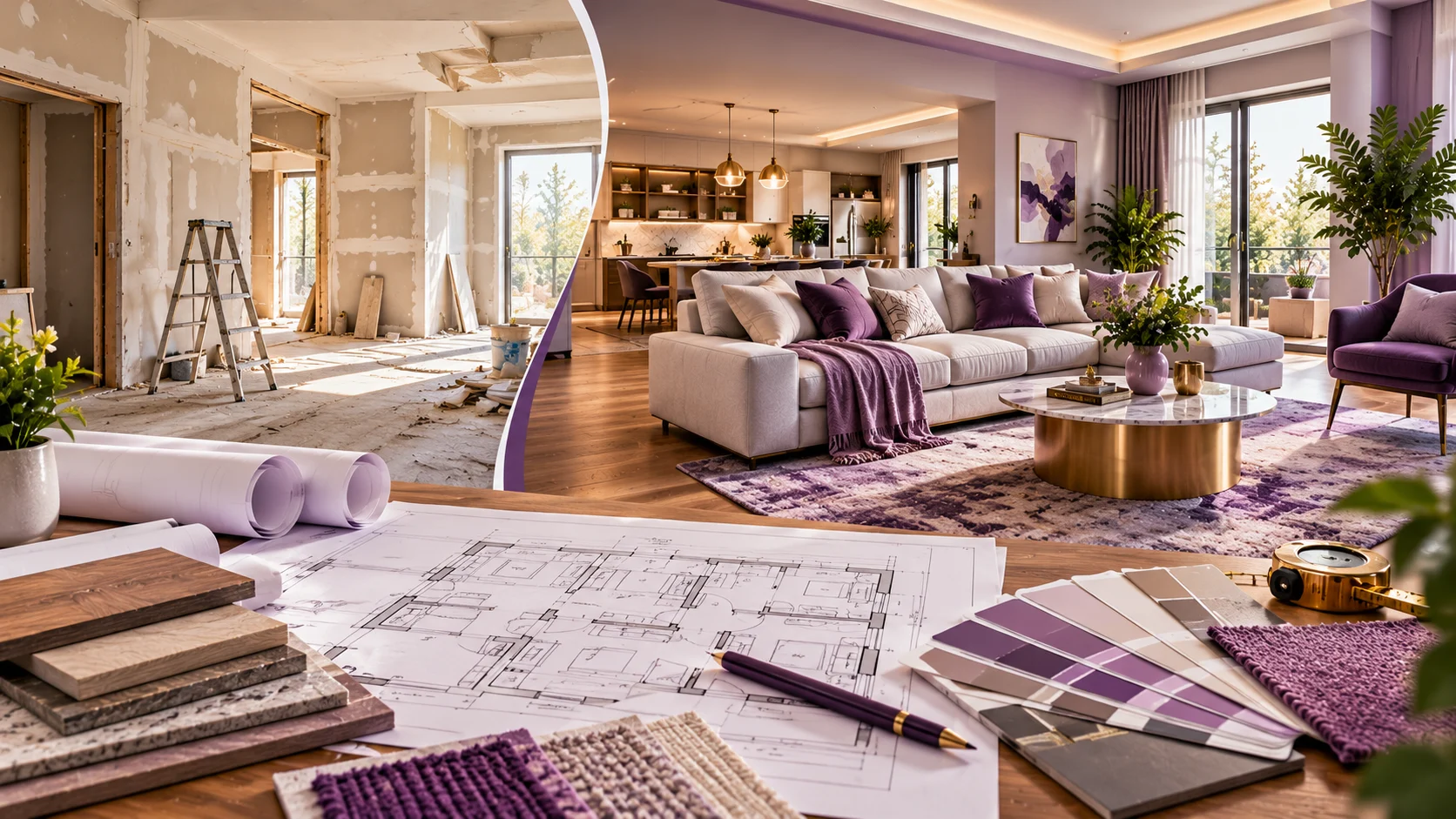
Renovating a house is an opportunity to improve how your home looks, feels, and functions. You might want to update an outdated kitchen, create a more comfortable living room, redesign your bedrooms, or give the entire property a fresh appearance. However, turning those ideas into a coordinated renovation can be more complicated than choosing attractive furniture and paint colors.
Hiring an interior designer for house renovation can help bridge the gap between inspiration and practical planning. A qualified designer can evaluate your existing space, develop room layouts, recommend suitable materials, and coordinate design decisions with the professionals responsible for construction.
But do you actually need an interior designer to renovate your house? How much does one cost, and what services should you expect?
The answers depend on your renovation goals, budget, and the complexity of the work. A simple decorating refresh may only require a consultation, while a complete home transformation can benefit from detailed drawings, material specifications, and ongoing design coordination.
This guide explains the role of an interior designer in home renovation, the services available, current cost estimates, and how to choose the right professional. You’ll also learn how to plan your renovation efficiently while avoiding expensive design mistakes.
What Does an Interior Designer Do During a House Renovation?
An interior designer helps improve the functionality, appearance, and usability of interior spaces.
During a house renovation, their responsibilities may include evaluating existing rooms, developing new layouts, selecting colors and materials, designing storage solutions, and specifying furniture, lighting, and fixtures.
According to the American Society of Interior Designers (ASID), professional interior design involves more than decorating. It also considers how people use spaces, accessibility, safety, materials, and relevant building requirements.
For example, imagine renovating a living room that feels crowded despite having sufficient square footage. An interior designer might recommend rearranging the seating, replacing oversized furniture, improving lighting, and introducing more practical storage.
These changes could improve everyday comfort without requiring major construction.
For a larger renovation, the designer might prepare floor plans, material schedules, cabinetry drawings, and other documents needed to communicate the intended design.
However, the exact services depend on the professional’s qualifications, local regulations, and your agreement.
Not every interior designer provides architectural drawings, manages contractors, or has authority to approve structural alterations.
Understanding the scope before hiring is essential.
Do You Need an Interior Designer for House Renovation?
Hiring an interior designer isn’t necessary for every renovation.
If you’re repainting a bedroom, replacing curtains, or purchasing a few pieces of furniture, you may be comfortable making those decisions yourself.
However, professional design assistance becomes more valuable when several rooms need coordinated improvements or when design choices affect permanent fixtures.
For example, remodeling a kitchen requires decisions about cabinetry dimensions, appliance locations, work surfaces, lighting, and storage. Making these choices independently can become overwhelming.
An interior designer can help organize the decisions into a coherent plan.
Professional assistance may also be helpful when you struggle to choose a consistent decorating style, have an awkward floor plan, or want to maximize a limited space.
If your renovation involves moving load-bearing walls, building an extension, or modifying important structural components, you may need an architect and structural engineer in addition to the designer.
The best approach is to match the professional team to the actual project rather than hiring based solely on job titles.
Interior Designer vs. Architect vs. Renovation Contractor
Homeowners sometimes use the terms interior designer, architect, and contractor interchangeably.
Although their work can overlap, they generally have different responsibilities.
| Professional | Main responsibility |
| Interior designer | Interior layouts, finishes, lighting concepts, furnishings, and design coordination |
| Architect | Building design, substantial layout alterations, architectural documentation, and applicable approvals |
| Renovation contractor | Physical construction, installation, trade coordination, and completing contracted work |
| Structural engineer | Evaluating and designing structural changes |
An interior designer may coordinate with contractors and review whether the work matches design specifications. However, that doesn’t automatically make the designer responsible for construction supervision or site safety.
Likewise, a contractor may offer design assistance, but not every contractor provides a complete interior design service.
The American Institute of Architects recommends involving appropriate design professionals when planning renovation projects that require technical evaluation and documentation.
For a major house renovation, collaboration between the designer, contractor, and relevant licensed professionals can help identify problems before construction begins.
When Should You Hire an Interior Designer?
Ideally, involve an interior designer during the initial planning stage rather than after construction is underway.
Early involvement allows the designer to evaluate your renovation goals before important decisions become difficult or expensive to change.
For example, if you’re renovating a kitchen, cabinetry design should be coordinated with electrical outlets, plumbing locations, lighting, and appliance dimensions.
Hiring a designer after the cabinets have been installed may limit your options.
The same principle applies to bathrooms, built-in wardrobes, and lighting installations.
However, you can still benefit from professional design assistance during a partially completed renovation.
A designer may help select remaining finishes, solve furniture layout problems, or coordinate decorative elements.
Before scheduling a consultation, collect photographs of your existing rooms, approximate dimensions, inspiration images, and a realistic budget.
This information helps the designer understand what you want and whether the project matches their services.
How the Interior Design House Renovation Process Works
A successful renovation typically moves through several connected stages.
Understanding the process can help you avoid purchasing furniture or materials before the layout has been finalized.
Initial Consultation and Home Assessment
The process generally begins with a discussion about your home, lifestyle, budget, and renovation priorities.
The designer may visit the property, assess existing conditions, and take measurements.
They should ask how different rooms are used, which problems you want to solve, and which existing features you prefer to keep.
A family with young children may prioritize durable surfaces and practical storage, while another household may focus on entertaining spaces or accessible layouts.
The initial assessment helps establish a realistic direction before detailed design work begins.
Design Concepts and Space Planning
After evaluating the home, the designer may prepare layout options, mood boards, and preliminary design concepts.
These can include furniture arrangements, color palettes, material samples, and three-dimensional visualizations.
A good layout should account for comfortable movement, furniture dimensions, storage, and natural lighting.
For example, an open-plan living and dining room may benefit from distinct furniture groupings rather than unnecessary partitions.
This stage is the ideal time to request revisions because changes on paper are generally easier than changes during construction.
Material Selection and Detailed Planning
Once the concept is approved, the designer can help specify flooring, cabinetry, countertops, wall finishes, lighting, and other materials.
The goal is to create a consistent design while selecting products appropriate for each room.
A bathroom requires different moisture-resistant materials from a dry living area.
Kitchen countertops need to tolerate everyday use, while bedroom finishes may prioritize comfort and appearance.
Ask for product specifications rather than relying only on inspirational photographs.
Construction Coordination and Final Styling
During construction, the designer may answer questions about the intended design, review samples, and communicate with the contractor.
The level of involvement depends on the contract.
Some designers provide periodic site visits, while full-service firms may offer more extensive coordination.
After the main renovation is completed, the final stage may involve arranging furniture, installing window treatments, positioning artwork, and adjusting decorative details.
These finishing decisions help connect the renovated rooms into a consistent interior.
How Much Does an Interior Designer Cost for House Renovation?
The cost of hiring an interior designer depends on the project’s size, complexity, location, and the services included.
According to Angi’s interior designer cost guide, updated August 31, 2026, homeowners in its U.S. project dataset typically spent between $2,055 and $15,256 on professional interior design services, with a reported average of $8,550.
The guide also identifies several pricing methods.
| Pricing method | Reported U.S. estimate |
| Hourly design services | |
| Fixed design fee | |
| Design services by area | |
| Percentage-based fee | 10%–30% of project cost |
These figures are market estimates for design-related services, not universal rates. They should not be interpreted as the total construction cost of renovating a house.
Actual fees may differ substantially by country, city, professional experience, and project scope.
Some designers also charge separately for drawings, material procurement, travel, and site visits.
Before signing an agreement, request a written fee structure showing exactly what is included.
How to Budget for a Whole-House Renovation
Your renovation budget should account for much more than the designer’s fee.
Construction labor, materials, cabinetry, plumbing, electrical work, permits, furniture, and finishing accessories may all require separate allocations.
It is also sensible to reserve a contingency for unexpected work.
For example, suppose your preliminary renovation estimate is $60,000. Setting aside an illustrative 10% contingency would provide another $6,000 for unforeseen expenses, creating a total planning allowance of $66,000.
That percentage is an example, not a guaranteed sufficient reserve. Older homes or technically complex projects may require a different amount.
Discuss the budget with your designer and contractor before approving expensive material selections.
Best Interior Design Ideas for Different Renovation Projects
Each room requires a slightly different approach because its purpose, furniture, and maintenance requirements are different.
Living Room Renovation Ideas
Living room renovation should begin with how the household uses the space.
Consider whether your main activities involve conversation, watching television, reading, or entertaining.
A designer may suggest rearranging furniture, creating a stronger focal point, or improving the relationship between seating and circulation.
Layered lighting can make the room more adaptable throughout the day.
Choosing furniture with suitable proportions also matters.
For example, a sculptural rounded coffee table can soften a living room dominated by straight furniture lines. Our Chubby Coffee Table Guide explains how table size, material, and placement affect the overall layout.
You don’t necessarily need to replace every furniture piece to improve the living room.
Kitchen Renovation Ideas
Kitchen renovation requires careful coordination between appearance and functionality.
A designer can help evaluate cabinet storage, appliance positioning, countertop materials, lighting, and the relationship between preparation and cleanup areas.
Before choosing finishes, identify the practical problems with your existing kitchen.
Perhaps the cabinets lack accessible storage, the work surface feels limited, or the lighting is inadequate.
Solving these problems should take priority over adding fashionable decorative features.
Material durability and appropriate installation are especially important because kitchens experience heat, moisture, and frequent cleaning.
Bedroom Renovation Ideas
Bedroom renovation should prioritize comfort, convenient storage, and a relaxing atmosphere.
The bed normally serves as the visual focal point.
An interior designer may recommend a more practical furniture arrangement, layered lighting, suitable window treatments, and a coordinated color palette.
Built-in wardrobes or improved closet organization can also reduce clutter.
If you’re choosing a furniture collection for a farmhouse-inspired renovation, our White Rustic Bedroom Set Guide explains how furniture dimensions, finishes, and storage features influence bedroom comfort.
A successful bedroom renovation should support restful sleep and everyday routines rather than simply imitate a hotel room.
Bathroom Renovation Ideas
Bathroom renovation involves a combination of design decisions and technical requirements.
An interior designer can help select the vanity, lighting, tiles, mirrors, and decorative finishes.
However, qualified professionals must address plumbing, electrical work, waterproofing, ventilation, and applicable building requirements.
A bathroom that looks attractive in a rendering may not be practical if its fixtures have insufficient clearance.
Always verify the proposed layout against actual product dimensions and the applicable local regulations.
How to Choose the Right Interior Designer
Choosing an interior designer should involve more than browsing attractive photographs.
A portfolio can reveal the designer’s aesthetic preferences, but you should also assess their ability to solve practical problems.
Look for projects with a similar scope to your renovation.
If you’re remodeling an older home, ask whether the designer has experience coordinating work in existing buildings.
If you’re renovating several rooms, review examples showing how they created a consistent design across an entire property.
Ask about their process, design deliverables, professional qualifications, and relationships with contractors.
Relevant credentials and professional memberships may provide useful information, but licensing requirements and permitted services vary by jurisdiction.
ASID’s interior design resources explain professional qualifications and can help homeowners understand what to look for.
Before hiring, request references from previous clients and confirm that the designer can provide the services your project actually requires.
Questions to Ask Before Hiring an Interior Designer
A consultation is your opportunity to clarify expectations before committing to a contract.
Useful questions include:
- Have you completed renovations similar to mine?
- What drawings, plans, and material specifications are included?
- How do you charge, and what services cost extra?
- Who coordinates the contractor and approves design changes?
- How are revisions, purchasing fees, and delays handled?
- Can you provide references from completed renovation projects?
The answers should help you understand how the designer works and whether their approach matches your expectations.
Pay particular attention to communication.
Renovation projects involve many decisions, and unclear responsibilities can lead to disputes.
A written agreement should identify deliverables, fees, payment milestones, responsibilities, and the procedure for approving changes.
How to Renovate a House on a Limited Budget
Hiring an interior designer doesn’t always mean choosing expensive furniture and luxury materials.
Some designers offer consultation-only services that help homeowners make better decisions while managing the work themselves.
If your budget is limited, consider renovating in phases.
Begin with rooms that have the most significant functional problems.
For example, improving kitchen storage and lighting may have greater everyday value than replacing attractive but functional living room furniture.
You can also preserve existing elements that remain in good condition.
Refinishing suitable cabinetry, rearranging furniture, or updating selected accessories may reduce unnecessary replacement.
For additional practical ideas, our Complete Home Decorating Guide explains how to improve interiors through furniture placement, lighting, color coordination, and thoughtful decorative choices.
Before purchasing more cabinets or storage furniture, evaluate whether reorganizing existing space could solve the problem. Our Home Organization Guide provides room-by-room storage strategies.
The best budget decisions prioritize improvements that solve genuine problems.
Common Mistakes to Avoid During House Renovation
One of the most expensive renovation mistakes is beginning construction before finalizing important design decisions.
For example, changing the kitchen layout after electrical wiring and plumbing have been installed can create additional work.
Another mistake is selecting materials solely because they look beautiful in photographs.
Actual samples may reveal different colors, textures, and maintenance requirements.
Homeowners sometimes underestimate the importance of accurate measurements.
Furniture and cabinets must fit the available space while allowing doors, drawers, and circulation routes to function properly.
Safety should also remain a priority.
For U.S. homes built before 1978, renovation work that disturbs painted surfaces may involve lead-based paint hazards. The Environmental Protection Agency’s Renovation, Repair and Painting Program establishes requirements for covered professional renovation work.
Other countries and jurisdictions have different regulations.
Never assume an interior designer’s involvement replaces the need for permits, qualified tradespeople, or appropriate safety assessments.
Frequently Asked Questions About Interior Designers and House Renovation
Hiring an interior designer can be worthwhile when your renovation involves complicated layouts, multiple rooms, difficult material decisions, or a need for coordinated design planning. However, the value depends on the services provided and your project’s actual requirements.
An interior designer can develop design plans for an entire house and may coordinate aspects of the renovation. Physical construction is generally completed by contractors and qualified tradespeople. Structural or regulated work may require additional licensed professionals.
Fees vary by location and project scope. Angi’s August 2026 U.S. cost guide reports hourly estimates of 500 and fixed-fee estimates of 12,000 for relevant design services. Your actual quotation may be outside these ranges.
For a renovation involving substantial design decisions, consulting the designer before construction begins can help establish a workable plan. If structural changes are involved, an architect or engineer may also need to be engaged early.
Yes. Some designers offer limited consultations, layout advice, or material recommendations without requiring a full-service contract. These options may help homeowners prioritize improvements while controlling design-service costs.
Yes. Furniture selection, color palettes, finishes, lighting concepts, and decorative materials are common interior design services. The exact responsibilities depend on the designer’s scope of work.
The timeline depends on the number of rooms, design complexity, revision process, product availability, and construction requirements. Request a project-specific schedule rather than relying on a general estimate.
Some designers assist with documentation or coordination, but their authority varies by jurisdiction and qualification. Structural, architectural, electrical, and plumbing work may require permits and appropriate licensed professionals.
Making Your House Renovation More Successful
A successful house renovation begins with understanding how you want your home to function.
An interior designer can help translate your preferences into coordinated layouts, material selections, lighting plans, and practical furniture arrangements.
Professional guidance may be particularly valuable when renovating multiple rooms, updating kitchens or bathrooms, or trying to create a consistent style throughout the house.
However, the best results come from combining attractive design with realistic planning.
Establish your budget early, measure existing spaces carefully, clarify professional responsibilities, and confirm technical requirements before construction begins.
Don’t assume that expensive materials or elaborate decorative features automatically create a better home.
A thoughtfully designed renovation should improve comfort, storage, circulation, lighting, and everyday usability.
Whether you’re refreshing a single room or transforming the entire property, the right interior designer can help you make informed decisions and create a home that remains functional, welcoming, and personally meaningful long after the renovation is completed.