A living room should feel comfortable, organized, and welcoming, but keeping televisions, gaming consoles, and entertainment accessories neatly arranged can be challenging. A rustic media cabinet offers a practical solution while introducing the natural warmth and character of wooden furniture.
Unlike ordinary TV stands that focus mainly on supporting a television, rustic media cabinets combine storage, decorative appeal, and everyday functionality. Their weathered wood finishes, sliding barn doors, metal hardware, and natural textures can complement farmhouse, country, industrial, and even contemporary interiors.
However, choosing the right cabinet involves more than finding an attractive design. The cabinet must fit your television, provide enough space for electronic equipment, support appropriate weight, and allow safe ventilation.
This guide explores rustic media cabinet styles, materials, dimensions, storage features, and decorating ideas. You will also learn how to compare furniture quality, manage cables, and choose a cabinet that works comfortably in your living room.
What Is a Rustic Media Cabinet?
A rustic media cabinet is a furniture piece designed to support or complement a television while providing storage for entertainment equipment and household accessories.
It typically features natural or wood-look materials, textured finishes, traditional detailing, and practical storage compartments.
Many designs include open shelves for gaming consoles and streaming devices, enclosed cupboards for accessories, and drawers for remotes or other smaller items.
Rustic media cabinets are sometimes called rustic TV stands, farmhouse media consoles, or rustic entertainment centers. Although these terms often overlap, an entertainment center may refer to a larger furniture arrangement with additional shelving or surrounding cabinets.
The primary appeal of rustic furniture lies in its natural-looking materials, warm colors, and distinctive character. These qualities can make an entertainment area feel more inviting without sacrificing functionality.
Popular Rustic Media Cabinet Styles
Rustic media cabinets are available in several designs, ranging from traditional farmhouse furniture to streamlined modern pieces.
Understanding the differences helps you choose furniture that complements your existing interior.
1. Farmhouse Rustic Media Cabinet
Farmhouse media cabinets combine comfortable country styling with everyday storage.
Common features include wood-grain finishes, paneled doors, simple cabinet shapes, and black or bronze-tone hardware.
Whitewashed oak, weathered brown, antique white, and natural wood finishes are particularly popular.
A farmhouse media cabinet can complement beige sofas, woven baskets, wooden coffee tables, and neutral area rugs. The overall effect feels relaxed rather than formal.
This style is especially suitable for homeowners who enjoy traditional furniture but prefer a practical, uncluttered living room.
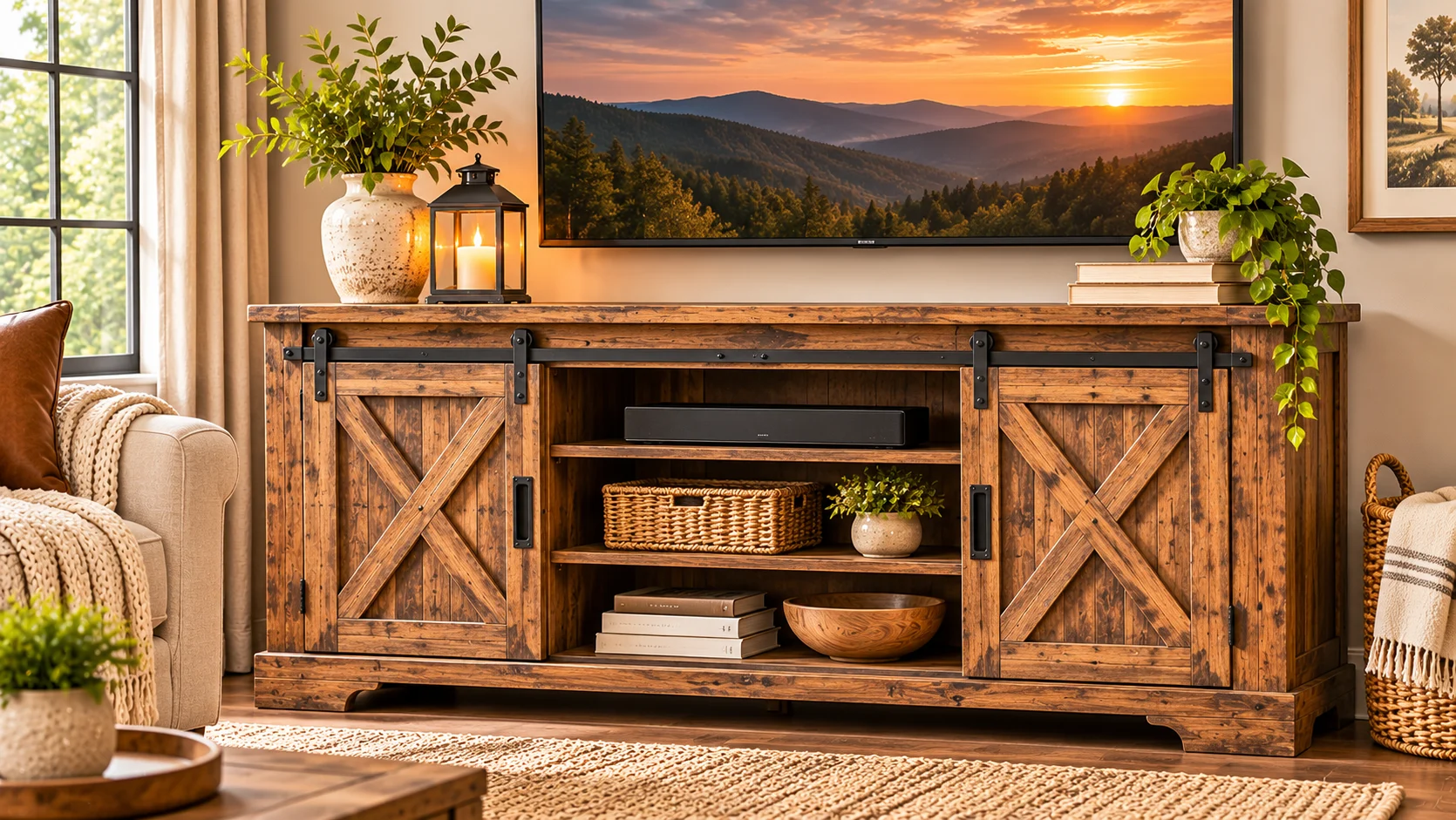
2. Rustic Barn Door Media Cabinet
Barn door media cabinets are recognizable for their sliding wooden doors, often supported by exposed metal tracks.
The doors create a farmhouse-inspired appearance while allowing access to different storage compartments.
Some designs feature X-shaped wooden panels, distressed finishes, and black metal accents.
One example is the Farmhouse 66 Inch TV Stand from Slumberland, which features sliding barn-style doors, adjustable storage areas, and cable management openings.
Sliding doors can be useful where outward-opening cabinet doors would interfere with nearby furniture. However, check whether the doors block shelves you need to access frequently.
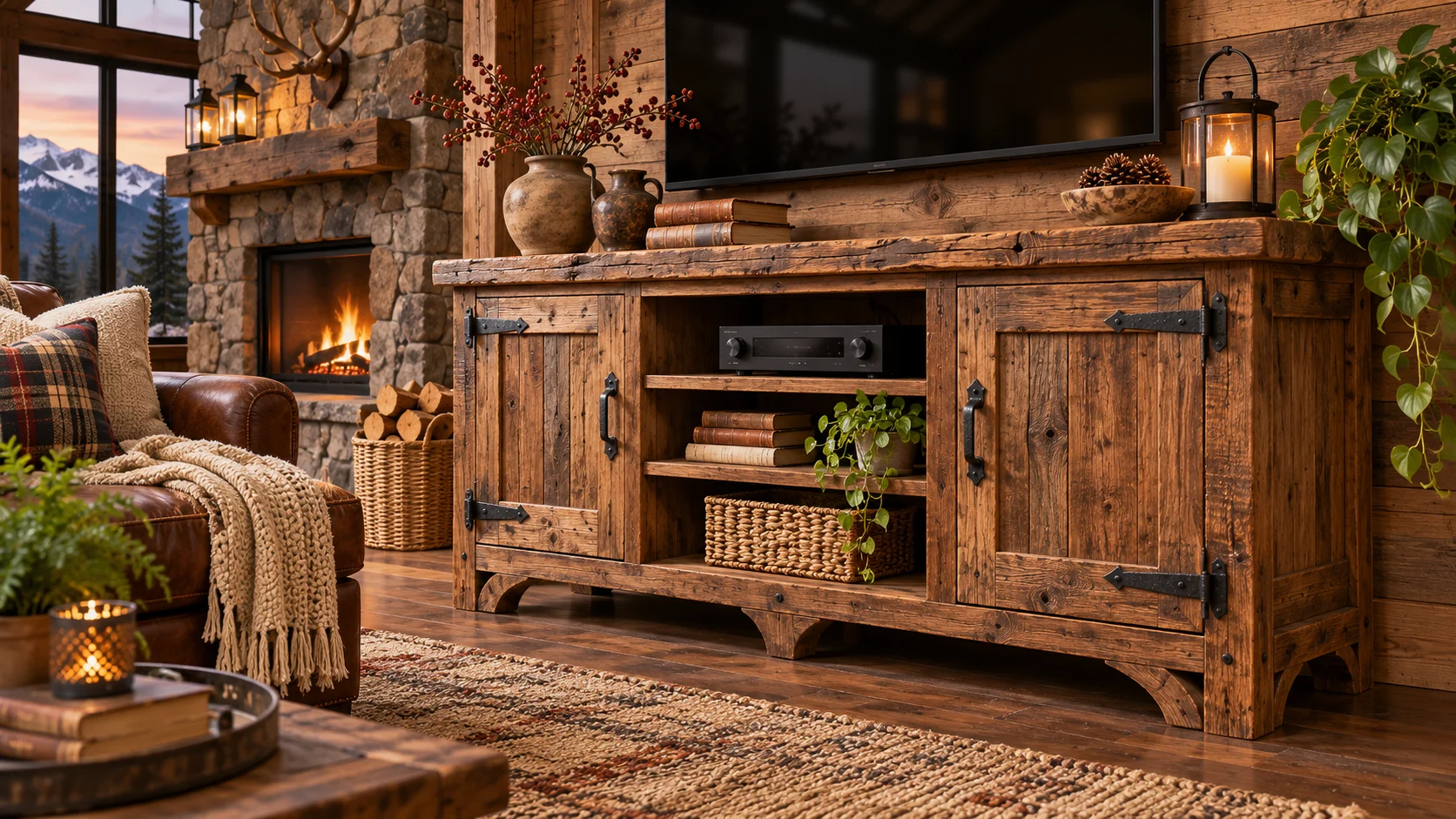
3. Reclaimed Wood Media Cabinet
Reclaimed wood media cabinets emphasize natural imperfections, distinctive grain patterns, and the character of previously used timber.
Depending on the wood’s history, the surface may contain knots, nail marks, variations in color, or other signs of age.
These characteristics can make each piece visually distinctive.
Reclaimed wood works particularly well with leather furniture, neutral upholstery, industrial lighting, and vintage-inspired accessories.
When buying reclaimed furniture, confirm that the wood has been properly prepared, cleaned, and finished for indoor use.
4. Industrial Rustic Media Cabinet
Industrial rustic cabinets combine wood surfaces with metal structures, creating a balance between natural warmth and utilitarian design.
Black steel frames, exposed hardware, open shelving, and darker wood finishes are common features.
This style can complement contemporary lofts, modern apartments, and living rooms with brick or concrete accents.
Compared with traditional farmhouse cabinets, industrial designs often use simpler shapes and fewer decorative details.
Open metal shelving can also provide convenient access to electronic equipment, although visible cords require careful organization.
5. Modern Rustic Media Cabinet
Modern rustic furniture combines natural textures with clean lines and restrained decoration.
A modern rustic media cabinet might feature a low rectangular silhouette, flat wooden doors, simple hardware, and a warm oak finish.
This design is suitable for homeowners who appreciate rustic character without wanting an elaborate farmhouse appearance.
For further inspiration, explore our guide to 15 popular interior design styles, which explains how rustic materials can complement modern, Scandinavian, industrial, and other interiors.
Best Materials for a Rustic Media Cabinet
The material influences how a media cabinet looks, how much it weighs, and how well it handles everyday use.
Solid Wood Media Cabinets
Solid wood cabinets are often associated with premium rustic furniture.
Oak, pine, maple, walnut, and other hardwoods or softwoods may be used, depending on the product.
Natural wood grain creates warmth, while suitable finishes protect the surface from ordinary wear.
Solid wood can be durable, but construction quality matters just as much as the material itself. Poorly joined furniture may develop problems even when made from expensive timber.
Some solid wood pieces also respond to changes in humidity, making appropriate indoor conditions important.
Engineered Wood and Veneers
Many affordable rustic media cabinets use MDF, particleboard, plywood, wood veneers, or combinations of these materials.
A wood veneer provides a thin layer of real wood over another supporting material, while laminate or printed finishes can imitate rustic timber.
These options can create an attractive appearance at a lower price than some solid hardwood designs.
However, quality varies considerably. Examine the edge finishing, shelf thickness, hardware, and stated weight capacity rather than assuming all engineered wood cabinets perform similarly.
Wood and Metal Combinations
Wood-and-metal media cabinets are particularly suitable for industrial and modern rustic interiors.
Metal frames can provide structural support, while wooden panels introduce warmth.
Look for secure connections, stable legs, smooth door operation, and a finish appropriate for your household.
The cabinet’s overall design and construction determine its strength, not simply the presence of metal components.
Rustic Media Cabinet Dimensions: Choosing the Right Size
A media cabinet should fit your television, surrounding furniture, and available wall space.
Unfortunately, there is no single standard cabinet size suitable for every living room.
Common Media Cabinet Widths
Compact rustic media cabinets are often approximately 40–50 inches wide, while medium-sized models may range from 55–65 inches.
Larger designs frequently measure 70–80 inches or more.
These are general furniture-shopping ranges rather than official industry standards.
For a real product example, the Amish Clarity Media Stand from DutchCrafters measures 60 inches wide, 19.5 inches deep, and 31 inches high.
The Slumberland farmhouse console mentioned earlier measures 66 inches wide, 17.5 inches deep, and 31.5 inches high.
These examples show why checking exact product specifications is more useful than relying on a general size category.
What Size Media Cabinet Do You Need for Your TV?
Television sizes are measured diagonally, so a 65-inch television is not actually 65 inches wide.
For a typical 16:9 screen, a 55-inch television has a screen width of approximately 48 inches, while a 65-inch screen is about 57 inches wide. Actual overall dimensions vary by model.
A cabinet wider than the television generally creates a more balanced appearance.
For example, a 60–70-inch cabinet may provide attractive proportions for many 55-inch televisions, while a 70–80-inch cabinet may suit many 65-inch models.
However, visual proportions are only one consideration.
If your television sits directly on the cabinet, its entire supporting base must fit securely on the surface. The cabinet must also meet the television manufacturer’s weight and support requirements.
What Is the Ideal Height for a Rustic TV Cabinet?
The correct cabinet height depends on your seating arrangement and the position of the television.
For comfortable viewing, the center of the screen should generally be close to your seated eye level rather than significantly above it.
A tall media cabinet can place the screen uncomfortably high, especially when paired with a large television.
Lower cabinets may create a more relaxed viewing position and can make the entertainment wall feel less crowded.
Before purchasing, sit in your usual viewing position and estimate where the center of the screen should be.
Remember to account for the television’s stand height, not just the cabinet itself.
If the television will be wall-mounted, you have more flexibility when selecting the cabinet height, but the screen should still be positioned comfortably.
How Deep Should a Rustic Media Cabinet Be?
Cabinet depth is easy to overlook, yet it can determine whether your entertainment equipment fits properly.
Many media consoles measure approximately 15–20 inches deep, although individual designs vary.
If you plan to store a gaming console, receiver, or other electronic device, measure its actual depth.
You also need space for power cables, HDMI connectors, and ventilation.
A cabinet that appears deep enough externally may have shallower internal shelves because of its back panel or construction.
For this reason, measure the usable interior depth rather than relying only on the advertised overall dimensions.
Storage Features Worth Looking For
A well-designed rustic media cabinet should accommodate both entertainment equipment and everyday accessories.
Open shelves are useful for devices that need ventilation and frequent access. They also make it easier to connect cables or replace equipment.
Enclosed cabinets provide concealed storage for controllers, board games, DVDs, and accessories you do not want on display.
Drawers can keep smaller belongings organized without requiring decorative baskets.
Adjustable shelves are particularly useful because equipment sizes change over time.
Consider how you use your entertainment area before choosing a storage arrangement.
Someone with multiple gaming consoles may benefit from open compartments, while a household that primarily uses streaming services might prefer more concealed storage.
Cable Management and Ventilation: Important Features
Good cable management helps your living room look organized, but it also makes the entertainment system easier to maintain.
Look for cabinets with rear cable openings, removable panels, or dedicated channels for power and HDMI cords.
These features allow wires to pass behind the furniture without being trapped or sharply bent.
Ventilation deserves equal attention.
Electronic devices generate heat during operation, and enclosed compartments can restrict airflow.
Sony’s television ventilation guidance emphasizes keeping ventilation openings unobstructed and following the requirements for the specific television model.
The same principle applies to gaming consoles, receivers, and other equipment: follow each manufacturer’s clearance instructions.
Avoid placing heat-generating electronics inside tightly enclosed wooden cupboards without suitable airflow.
Also consider remote-control compatibility. Opaque wooden cabinet doors can block infrared signals, so equipment that uses infrared remotes may need an open compartment or another compatible control arrangement.
How to Decorate Around a Rustic Media Cabinet
A rustic media cabinet can become an attractive focal point, but the surrounding decorations should support the overall living room design.
Balance the Cabinet With Your Sofa and Coffee Table
A substantial wooden cabinet often works best when balanced by furniture with softer shapes and comfortable upholstery.
Cream, beige, charcoal, and muted green sofas can complement natural wood finishes.
A simple area rug helps connect the seating and entertainment areas.
For a more creative arrangement, explore our blooming coffee table guide, which discusses organic shapes, materials, and furniture proportions.
Rounded coffee tables can soften the straight lines of a rectangular media console.
Choose Wall Colors That Complement Rustic Wood
Warm white, beige, soft gray, olive green, and muted earth tones can work beautifully with rustic wooden furniture.
Darker cabinets may benefit from lighter walls, while pale oak and whitewashed designs can complement more colorful surroundings.
Avoid trying to match every wooden surface perfectly.
Repeating compatible undertones and materials is often enough to create visual harmony.
Keep the Cabinet Top Uncluttered
A few carefully selected accessories can make a rustic media cabinet feel personal without competing with the television.
Consider a ceramic vase, a small stack of books, or a decorative object positioned away from the screen.
Avoid blocking ventilation openings or placing anything where it could fall against the television.
If the cabinet already features decorative barn doors or prominent wood grain, minimal accessories often create the most balanced appearance.
Can a Rustic Media Cabinet Work in a Small Living Room?
Yes. The key is choosing an appropriately sized cabinet rather than assuming rustic furniture must be large and heavy.
A compact, low-profile console can provide useful storage without dominating the room.
Lighter wood finishes and simple door designs may make the furniture appear less visually bulky.
Consider a cabinet with both open shelving and concealed compartments to reduce visible clutter.
A wall-mounted television can also free up the cabinet top, provided the screen and furniture are installed safely.
Before buying, measure the surrounding walking routes and check that doors or drawers can open comfortably.
Our complete guide to home decorating offers additional advice on furniture placement, room proportions, and creating functional spaces.
How Much Does a Rustic Media Cabinet Cost?
Rustic media cabinet prices vary depending on size, materials, construction, finish, and brand.
Budget-friendly manufactured models may cost a few hundred dollars, while substantial solid hardwood or custom-made cabinets can cost considerably more.
For example, DutchCrafters advertises its customizable solid wood Clarity media stand from approximately $2,167, although prices and configurations may change.
A high price does not automatically guarantee the right furniture for your room.
Compare the construction, storage configuration, warranty, delivery charges, and manufacturer specifications before deciding.
For everyday use, secure construction and suitable equipment storage are often more important than decorative details.
How to Check the Quality Before Buying
Start by examining the cabinet’s construction.
Doors should open smoothly, drawers should operate without excessive movement, and shelves should feel adequately supported.
Check the listed weight capacity of the top surface and individual shelves.
Also confirm whether assembly is required and whether all necessary hardware is included.
If shopping online, examine photographs of the interior compartments rather than relying exclusively on the styled product image.
A detailed product listing should provide materials, dimensions, storage measurements, and practical assembly information.
If those details are missing, contact the retailer before ordering.
How to Clean and Maintain a Rustic Wooden Media Cabinet
Regular maintenance helps preserve the cabinet’s finish and appearance.
Remove dust with a soft cloth, paying attention to textured wood surfaces and decorative hardware.
Use cleaning products recommended for the specific finish, and avoid soaking wooden surfaces.
The Canadian Conservation Institute’s furniture care guidance explains how moisture, sunlight, and changing humidity can affect wooden furniture.
Keep drinks away from unprotected surfaces, and use suitable coasters when necessary.
Dust electronics separately and make sure ventilation openings remain clear.
When moving the cabinet, remove equipment and lift the furniture appropriately rather than dragging it across the floor.
Safety Considerations for Rustic Media Cabinets
Safety is particularly important when a media cabinet supports a large television.
The U.S. Consumer Product Safety Commission recommends securing televisions and appropriate furniture to prevent dangerous tip-over accidents.
Choose furniture specifically designed to support a television, and follow the instructions for both the television and cabinet.
Use suitable anti-tip hardware where required, particularly in homes with children.
Avoid overloading shelves or placing heavy equipment on unsupported surfaces.
Keep electrical cords organized and out of children’s reach.
A stable cabinet, proper installation, and appropriate ventilation contribute to a safer entertainment area.
Common Mistakes to Avoid When Choosing a Media Cabinet
One common mistake is purchasing a cabinet based only on the television’s advertised screen size.
The actual TV base, furniture weight capacity, and available surface area are more important.
Another mistake is selecting enclosed storage without checking ventilation requirements.
Buyers may also overlook the cabinet’s internal depth, making it difficult to connect gaming consoles or other equipment.
Finally, avoid choosing oversized rustic furniture for a compact room simply because it looks attractive in a showroom.
Measure carefully and prioritize a cabinet that works with your layout and everyday activities.
Frequently Asked Questions About Rustic Media Cabinets
A rustic media cabinet generally emphasizes both storage and appearance, often including cupboards, drawers, and shelving. A TV stand may be simpler and designed primarily to support a television. However, manufacturers frequently use these terms interchangeably.
Some rustic media cabinets use solid wood, while others combine wood veneers, plywood, MDF, particleboard, or metal components. Always check the construction specifications because a realistic wood-grain finish does not necessarily mean solid hardwood.
A cabinet approximately 70–80 inches wide can create balanced proportions for many 65-inch televisions, although smaller cabinets may also be compatible. The essential requirements are full support for the television base, adequate weight capacity, and compliance with the manufacturer’s instructions.
Sliding barn doors can be practical because they do not swing outward into the room. However, they may cover adjacent compartments when opened and can restrict infrared remote signals when closed. Consider your equipment and storage habits before choosing this design.
Yes, provided the compartment offers sufficient space, ventilation, and access to cables. Follow the gaming console manufacturer’s instructions regarding orientation and airflow. Avoid tightly enclosed compartments that allow heat to accumulate.
Natural oak, walnut, weathered brown, and whitewashed finishes can all complement rustic interiors. The best choice depends on the flooring, wall colors, and surrounding furniture. Warm, natural finishes often create a relaxed farmhouse atmosphere.
Yes. A rustic media cabinet can provide storage beneath a wall-mounted television while creating a coordinated entertainment area. Proper wall mounting, comfortable screen height, cable management, and furniture stability are still important.
A rustic media cabinet can be a worthwhile purchase if you appreciate natural textures and need organized entertainment storage. The best choice combines a suitable design with reliable construction, appropriate dimensions, ventilation, and a price that fits your budget.
Create a Warm and Organized Entertainment Space
A rustic media cabinet can bring warmth, texture, and practical storage into your living room. From farmhouse barn door designs to modern rustic consoles, there are options for different decorating preferences and room sizes.
The most important consideration is finding a cabinet that works as well as it looks.
Measure your television and electronic equipment, compare construction materials, and check storage, ventilation, and safety requirements before purchasing.
With thoughtful furniture placement and simple decorating choices, a rustic media cabinet can help transform your entertainment area into a comfortable, organized, and welcoming part of your home.